
Free Data Handling Activity Sheet | Year 3 Core | BookFlik
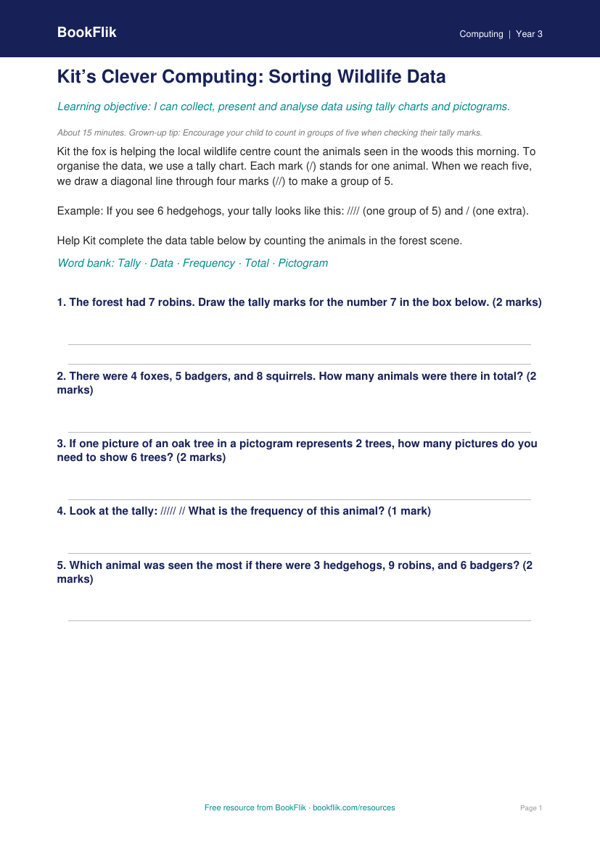
Boost your classroom or home learning sessions with our engaging Computing data handling activity sheet year 3 core resource. This printable pack is designed specifically for children aged seven to eight, helping them master the basics of collecting, organising, and presenting information.
In this lesson, Kit the fox leads children through an exciting project set at the local village green. Pupils will help Kit count the different types of wildlife found in the park, such as robins, hedgehogs, and badgers. By using tally charts and simple pictograms, children learn how to turn raw observations into clear, visual data. This Computing data handling activity sheet year 3 core aligns perfectly with the UK National Curriculum for Key Stage 2, focusing on the essential skills of recording and interpreting digital and non-digital information.
Teachers can use this resource as a guided lesson starter or an independent task during computing or maths blocks. Parents will find it an excellent tool for home learning, providing a structured way to practise logical thinking and analytical skills. The activities are designed to be intuitive, ensuring that children gain confidence in spotting patterns and drawing conclusions from their findings.
Because this is a Computing data handling activity sheet year 3 core document, it is pitched exactly at the expected standard for Year 3 learners. The language is accessible, and the instructions are clear, allowing children to work through the tasks with minimal support. For fast finishers, we have included a brief extension task that invites pupils to create their own survey questions about their favourite playground games.
Download this free resource today to help your pupils develop their data literacy skills in a fun, relatable way. It is the perfect addition to any primary school computing programme, ensuring that your learners are ready for more complex digital projects in the future.
How to use this activity sheet
- Time: about 15 minutes
- At home: Encourage your child to count in groups of five when checking their tally marks.
- In the classroom: Discuss why we use a diagonal line for the fifth tally mark to make counting easier.
Preview the worksheet
If the preview does not load, open the PDF in a new tab.