
Free Binary Activity Sheet | Year 6 Core | BookFlik
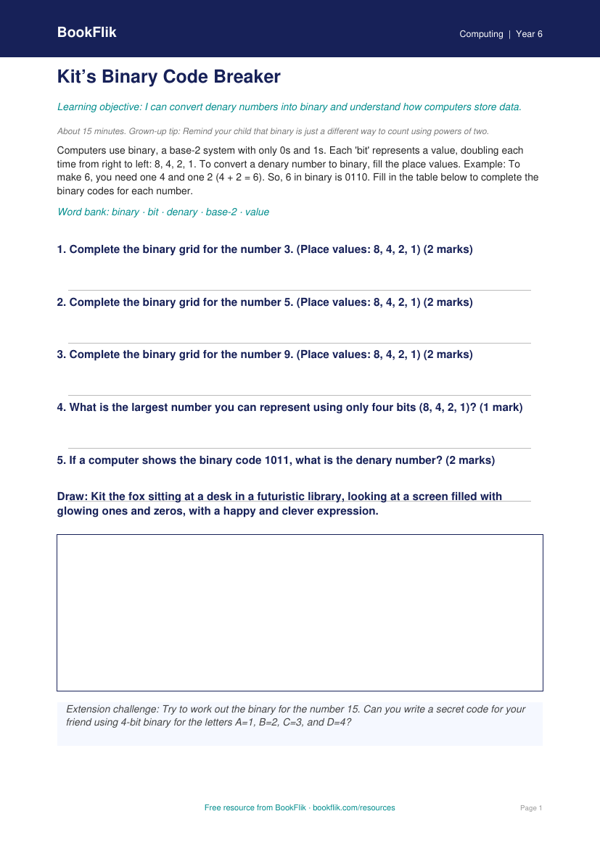
Unlock the secrets of digital logic with our new Computing binary activity sheet year 6 core resource. Designed specifically for the UK National Curriculum, this engaging worksheet helps pupils master how computers process information using only ones and zeros. By exploring the base-2 number system, children will develop a deeper understanding of how data is stored, transmitted, and displayed on screens in a format that feels like a clever puzzle.
Our Computing binary activity sheet year 6 core is perfect for teachers planning their primary computing lessons or for parents looking to support their child’s learning at home. The activity introduces the concept of place value in binary, challenging students to convert denary numbers into binary code and back again. As they work through the exercises, children will see how patterns create the digital world they interact with every day.
This resource is tailored to the expected standard for Year 6 learners. It features clear, step-by-step instructions and encourages logical thinking, which is a key requirement of the computing curriculum. Whether used during a busy school afternoon or as a quiet home-learning task, this Computing binary activity sheet year 6 core provides a solid foundation for more complex computer science topics.
The pack includes a variety of tasks, ranging from simple recall of binary place values to multi-step reasoning problems that require careful attention to detail. We have also included an extension section for fast finishers, which introduces the idea of how text can be represented using binary codes. This ensures that every child stays challenged and engaged throughout the lesson. Download this free resource today to help your class or child build confidence in their computing skills and gain a clearer insight into the technology that powers our modern world.
How to use this activity sheet
- Time: about 15 minutes
- At home: Remind your child that binary is just a different way to count using powers of two.
- In the classroom: Encourage pupils to draw a 4-column grid (8, 4, 2, 1) on their scrap paper to help them visualise the conversion.
Preview the worksheet
If the preview does not load, open the PDF in a new tab.