
Free Levers And Pulleys Drawing Sheet | Year 4 Core | BookFlik
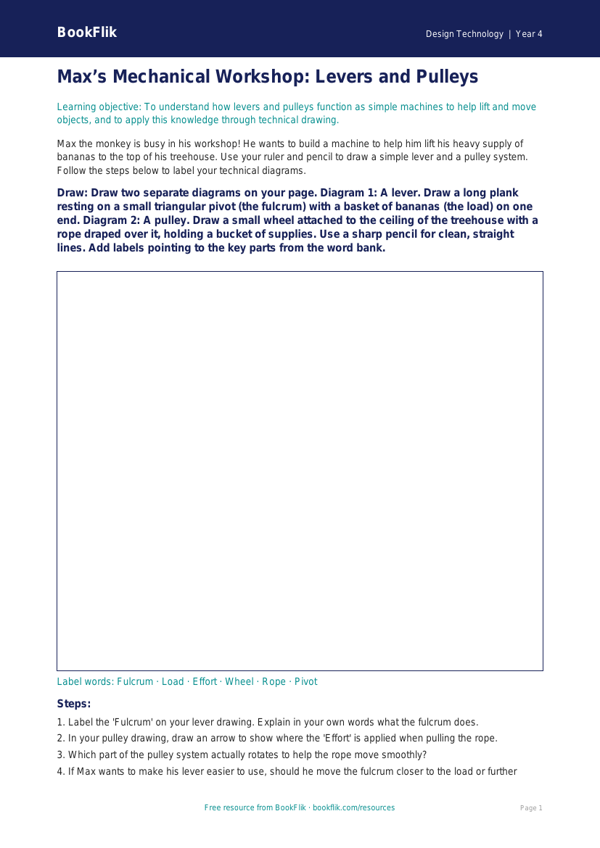
Bring mechanical systems to life in your classroom with our engaging Design Technology levers and pulleys drawing sheet year 4 core resource. Designed specifically for Year 4 pupils, this activity helps children bridge the gap between theoretical knowledge and practical application. By exploring how simple machines work, students will develop their understanding of how forces can be used to move objects with greater ease.
This Design Technology levers and pulleys drawing sheet year 4 core is perfectly aligned with the UK National Curriculum, which expects Year 4 pupils to understand how mechanical systems such as levers and pulleys create movement. Through this activity, learners will identify the key components of these systems, including fulcrums, loads, and efforts. Max the monkey, our resident maths enthusiast, guides the students through the logic of how these machines reduce the force required to lift heavy items, making complex concepts accessible and fun.
Teachers can use this resource as a formative assessment tool after a practical building session or as a pre-lesson task to spark curiosity. The sheet encourages pupils to sketch their own designs, label the moving parts, and explain how their mechanism functions. Whether you are teaching a unit on playground equipment or simple tools, this Design Technology levers and pulleys drawing sheet year 4 core provides a structured way for children to document their engineering journey.
This resource is tailored for learners working at the expected standard. It includes five to seven questions that range from simple recall of key terminology to applying knowledge to new scenarios. By encouraging children to think like inventors, this worksheet builds confidence in both scientific inquiry and technical drawing. Download this free, high-quality educational resource today to help your Year 4 class master the mechanics of movement in a creative, colourful, and clear way that supports their ongoing development in the primary curriculum.
Preview the worksheet
If the preview does not load, open the PDF in a new tab.