
Dynamics in Music Worksheet | Class 4 CBSE | BookFlik
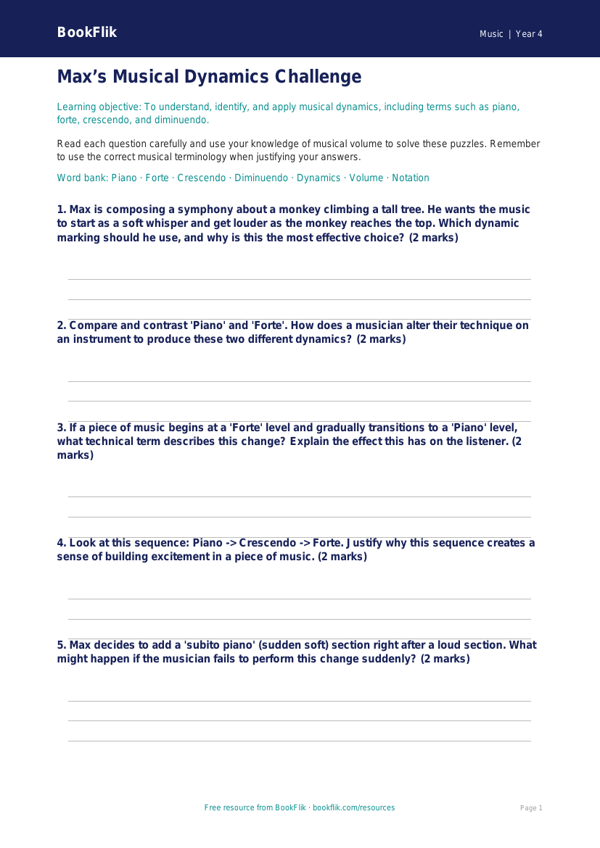
Boost your classroom music lessons with our comprehensive Music dynamics worksheet year 4 greater depth resource. Designed specifically for Class 4 pupils, this material explores the concepts of volume, intensity, and musical expression, aligning perfectly with the CBSE / NCERT Curriculum requirements for listening, composing, and appraising music.
In this lesson, Max the monkey takes centre stage, guiding pupils through a series of complex musical puzzles. Rather than simply identifying loud and quiet sounds, students will delve into the nuances of Italian terminology, such as piano, forte, crescendo, and diminuendo. By using this Music dynamics worksheet year 4 greater depth, learners will analyse how composers manipulate volume to evoke specific emotions or tell a story through sound.
Teachers can utilise this resource as a standalone challenge for high-attaining pupils or as an extension activity for a whole-class inquiry into orchestral textures. The worksheet encourages students to move beyond basic recognition, asking them to justify their choices when composing short melodic phrases. The differentiation is built-in; while core tasks focus on identifying dynamics in recorded pieces, the greater depth section requires pupils to evaluate the impact of sudden dynamic shifts and contrast different musical styles.
What makes this Music dynamics worksheet year 4 greater depth particularly effective is its focus on higher-order thinking. Students are challenged with questions such as: Explain why a composer might choose a gradual crescendo instead of a sudden change in volume? Compare and contrast the use of dynamics in a lullaby versus a film score. Justify your answer when selecting instruments to represent a thunderstorm. What might happen if a piece of music lacked dynamic variety?
This teacher-created resource provides a structured yet creative approach to mastering musical terminology. Download it today to foster a deeper appreciation for the power of sound and help your Class 4 students develop their skills as critical listeners and confident young composers.
Preview the worksheet
If the preview does not load, open the PDF in a new tab.