
Free Classification Keys Activity Sheet | Year 6 | Science | BookFlik
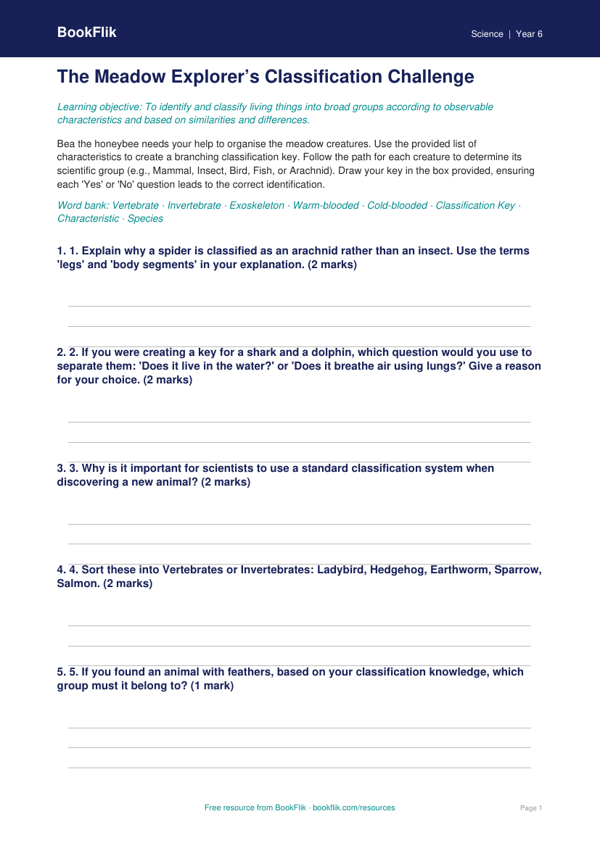
Enhance your classroom science lessons with our engaging Science classification keys activity sheet year 6 core. Designed specifically for Year 6 learners, this resource helps pupils develop a deep understanding of how living things are classified into broad groups according to common observable characteristics.
In this lesson, your students will join Bea the honeybee as she navigates the natural world. By using a series of yes or no questions, children will learn to identify various invertebrates and vertebrates, honing their ability to use and create their own branching classification keys. This Science classification keys activity sheet year 6 core is perfectly aligned with the Australian Curriculum (ACARA), which requires Year 6 pupils to describe how living things are classified into broad groups according to common observable characteristics and based on similarities and differences.
Teachers can use this versatile resource as a guided classroom activity, an independent challenge, or a homework task to consolidate learning after a practical fieldwork session. The sheet includes clear, age-appropriate vocabulary and structured tasks that guide students through the process of sorting organisms based on specific physical traits. Whether your class is exploring the local school grounds or studying biodiversity from the classroom, this Science classification keys activity sheet year 6 core provides the perfect framework for scientific inquiry.
This resource is tailored to the expected standard for Year 6, ensuring that pupils feel both challenged and supported as they master the skills of logical deduction and systematic classification. With five to seven questions ranging from simple recall to the application of key-building skills, students will gain confidence in their scientific literacy. Download this free, high-quality educational resource today to bring the fascinating world of biological taxonomy to life for your Year 6 students, helping them think like real scientists while they explore the natural world.
Preview the worksheet
If the preview does not load, open the PDF in a new tab.