
Free Everyday Materials Word Mat | Year 1 | Science | BookFlik
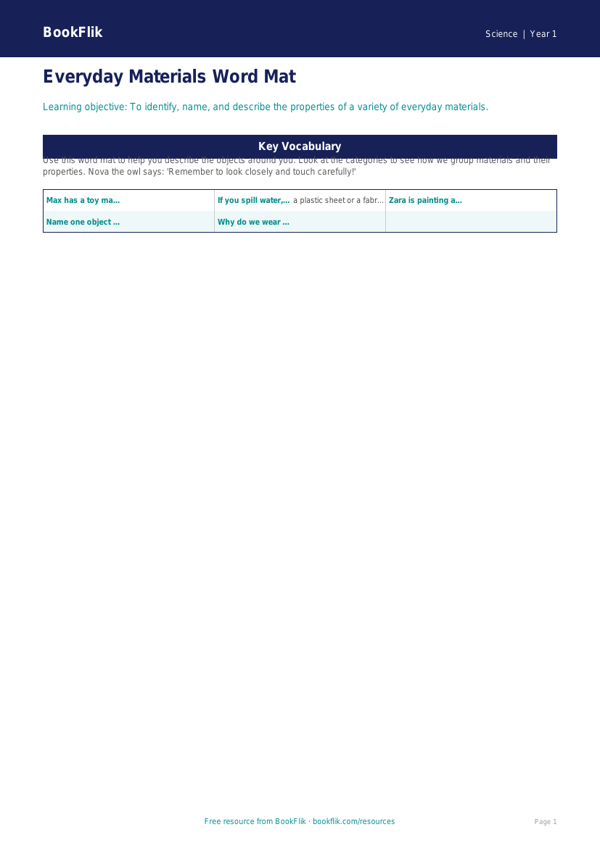
Boost your classroom learning with our vibrant and engaging Science everyday materials word mat year 1 core resource. Designed specifically for Year 1 pupils, this printable aid is the perfect companion for exploring the physical properties of objects found in our homes and classrooms.
This beautifully illustrated resource helps children develop their scientific vocabulary by linking key terms to clear, colourful images. Pupils will learn to identify and describe materials such as wood, plastic, glass, metal, water, and rock. By using this Science everyday materials word mat year 1 core, students can confidently articulate whether an object is hard, soft, stretchy, shiny, rough, or waterproof. These essential descriptive skills form the foundation of scientific enquiry, allowing children to compare and group objects based on their properties.
Teachers can integrate this resource into daily lessons in various ways. It serves as an excellent prompt during class discussions, a handy reference during independent writing tasks, or a visual scaffold for small group investigations. Because this Science everyday materials word mat year 1 core is designed at the expected standard, it perfectly aligns with the Australian Curriculum (ACARA) requirements for Year 1 Science, helping children to distinguish between an object and the material from which it is made.
To support your learners, we have included five engaging questions on the back:
1. Can you name three objects in the classroom made from wood?
2. Which material is better for a window, glass or fabric? Why?
3. If you wanted to build a toy boat, would you choose metal or plastic?
4. Can you find something in the room that feels rough to touch?
5. How would you describe the properties of your pencil?
Download this essential resource today to help your Year 1 students build confidence, expand their scientific vocabulary, and deepen their understanding of the world around them. It is an ideal tool for fostering curiosity and academic success.
Preview the worksheet
If the preview does not load, open the PDF in a new tab.