
Free Seasonal Changes Assessment | Year 1 | Science | BookFlik
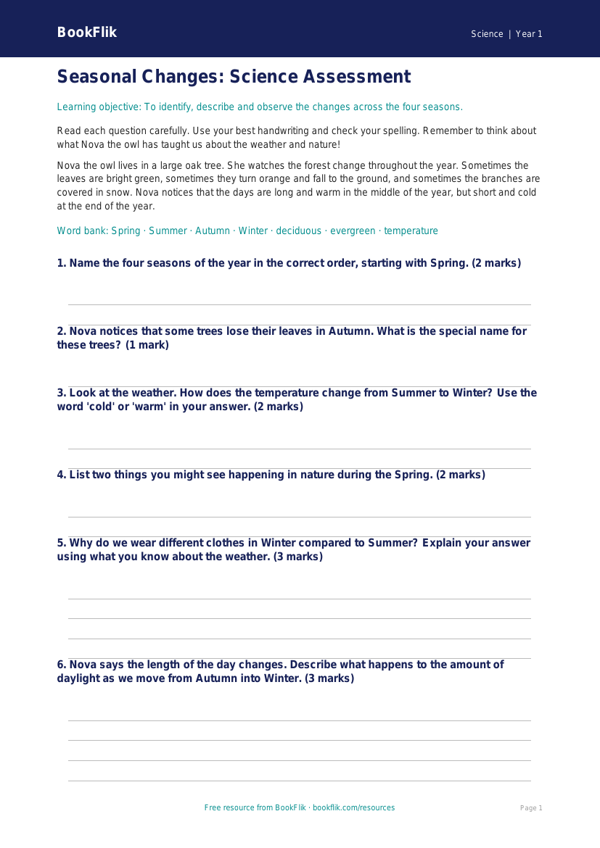
Boost your classroom confidence with our comprehensive Science seasonal changes assessment year 1 core resource. Designed specifically for Year 1 pupils, this assessment tool is the perfect way to evaluate your class’s understanding of the natural world and the way our environment shifts throughout the year.
Our resource features the curious barn owl, Nova, who guides children through bright, engaging questions about the weather, daylight hours, and the signs of spring, summer, autumn, and winter. This Science seasonal changes assessment year 1 core pack is fully aligned with the Australian Curriculum (ACARA), helping teachers track progress in identifying seasonal patterns and observing the changing states of nature.
What will children learn?
Pupils will demonstrate their ability to name the four seasons, describe typical weather patterns associated with each, and understand how the length of the day changes. They will also explore how plants and animals adapt to the different times of the year. This assessment includes five to seven carefully crafted questions, ranging from simple recall tasks to more thoughtful application questions, ensuring a balanced view of each child’s development.
How can teachers use it?
This resource is ideal for end-of-unit evaluations or as a formative check-in to see which concepts might need further reinforcement. Because this Science seasonal changes assessment year 1 core material is provided as a ready-to-print resource, it saves you valuable planning time while providing high-quality, original content.
The differentiation level is set at the core expected standard, making it accessible for the majority of Year 1 learners. Whether you are teaching about the falling leaves of autumn or the blossoming flowers of spring, this assessment provides clear, accurate data to inform your future planning. Download this essential resource today to make tracking progress in your science lessons simple, effective, and fun for every young scientist in your classroom.
Preview the worksheet
If the preview does not load, open the PDF in a new tab.