
Free Cybersecurity Writing Frame | Class 4 | Computing | BookFlik
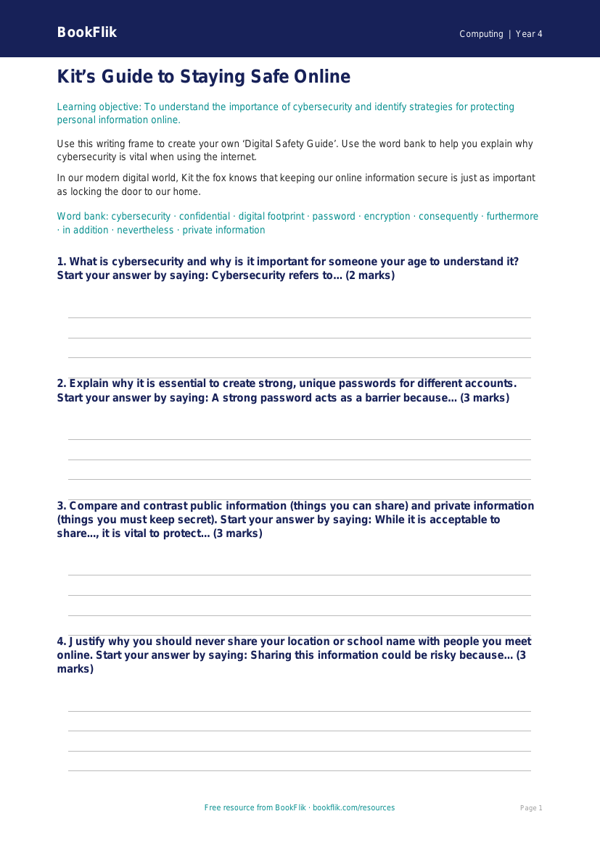
Boost your pupils’ digital literacy with our expert-designed Computing cybersecurity writing frame year 4 greater depth resource. As children increasingly navigate online environments, understanding how to stay safe is an essential skill. This free, downloadable writing frame is specifically crafted to support Class 4 students in articulating the importance of strong passwords, the risks of sharing personal information, and the necessity of reporting suspicious digital activity.
Aligned with the CBSE / NCERT Curriculum for Computing, this resource encourages pupils to think critically about their online footprint. By using our Computing cybersecurity writing frame year 4 greater depth, students move beyond basic safety rules to explore the ‘why’ behind digital security. The frame includes scaffolded prompts that guide learners to construct persuasive arguments about data privacy, ensuring they can explain the potential consequences of weak security measures in a clear, formal tone.
Teachers can integrate this tool into lessons on internet safety or use it as a standalone exercise to assess comprehension of digital citizenship. The resource is meticulously differentiated to challenge gifted and talented learners. While standard tasks focus on identifying risks, the greater depth version requires students to justify their choices, compare different security strategies, and evaluate what might happen if specific protocols were ignored. This Computing cybersecurity writing frame year 4 greater depth provides the perfect framework for students to showcase their analytical skills.
The pack includes six to eight thought-provoking questions, such as: Explain why a complex password is more secure than a simple one; Justify your answer regarding why we should never share our location online; and What might happen if an unauthorised user gained access to a personal account? These higher-order thinking tasks promote deeper engagement, helping pupils develop the vocabulary and reasoning needed to become responsible, informed digital citizens in an ever-evolving technological landscape. Download this essential resource today to empower your classroom.
Preview the worksheet
If the preview does not load, open the PDF in a new tab.