
Free Still Life Worksheet | Year 3 Core | BookFlik
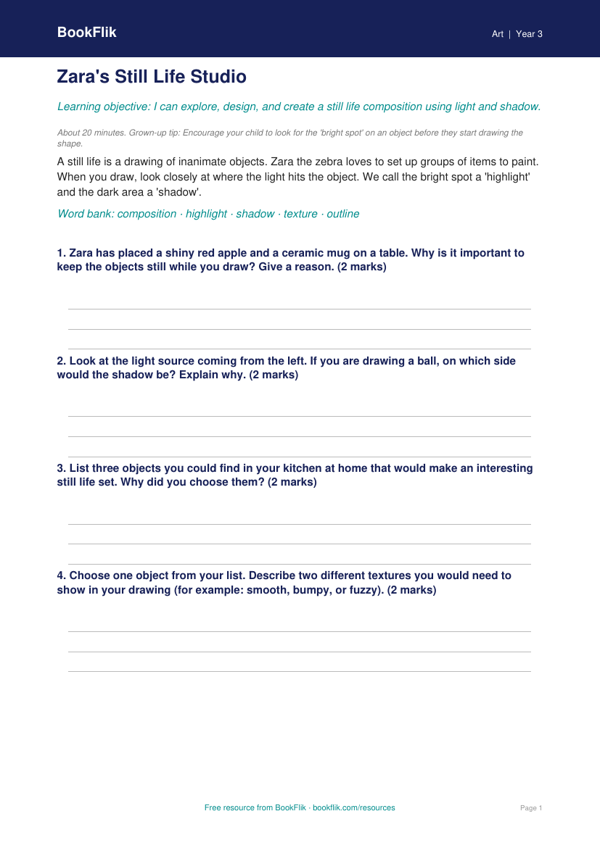
Bring the beauty of the everyday into your classroom with our engaging Art still life worksheet year 3 core resource. Designed specifically for Key Stage 2 learners, this activity invites children to explore the world of still life art. Zara the zebra, our creative friend who loves spotting patterns and shapes, guides students through the process of observing common objects like fruit, teapots, and flowers.
This Art still life worksheet year 3 core is perfectly aligned with the UK National Curriculum. It encourages children to develop their observational drawing skills, focus on composition, and experiment with light and shadow. By selecting simple items found in a typical British kitchen or garden, pupils learn how to turn ordinary objects into a masterpiece. Teachers and parents can use this resource to introduce the concept of arrangement, helping children understand how to place objects to create a balanced piece of art.
As part of our Art still life worksheet year 3 core, students will find clear, step-by-step instructions that break down the artistic process. The activities are designed to be accessible for all learners at the expected standard, ensuring that every child feels confident and inspired. Whether you are teaching in a busy London classroom or home-schooling in a quiet village, this resource provides a structured yet creative approach to drawing.
Beyond just drawing, this worksheet encourages pupils to look closely at the world around them, noticing the colours and textures of an oak leaf or a shiny apple. It is a fantastic way to build patience and attention to detail. For fast finishers, we have included a creative extension task that challenges them to add a background pattern inspired by Zara’s love of stripes. Download this free, high-quality resource today to help your Year 3 pupils develop their artistic confidence and appreciation for the world of still life.
How to use this worksheet
- Time: about 20 minutes
- At home: Encourage your child to look for the ‘bright spot’ on an object before they start drawing the shape.
- In the classroom: Provide students with varied objects like pinecones, shells, or fruit to help them identify different textures.
Preview the worksheet
If the preview does not load, open the PDF in a new tab.