
Free Cybersecurity Word Mat | Year 5 Greater Depth | BookFlik
Boost your classroom resources with our comprehensive Computing cybersecurity word mat year 5 greater depth. Designed specifically for Year 5 pupils who are ready to explore the complexities of digital safety, this resource provides an essential vocabulary scaffold for the UK National Curriculum. As children navigate the digital world, understanding the mechanics of online security is vital. Our Computing cybersecurity word mat year 5 greater depth introduces sophisticated terminology such as encryption, authentication, phishing, and malware, moving beyond basic internet safety to examine the technical foundations of cyber threats and protective measures.
Teachers can utilise this resource to facilitate deep-dive discussions during computing lessons, encouraging pupils to articulate how data is protected and why specific protocols exist. Whether used as a desk-side reference during coding projects or as a prompt for investigative class debates, this Computing cybersecurity word mat year 5 greater depth ensures learners can communicate their understanding with precision.
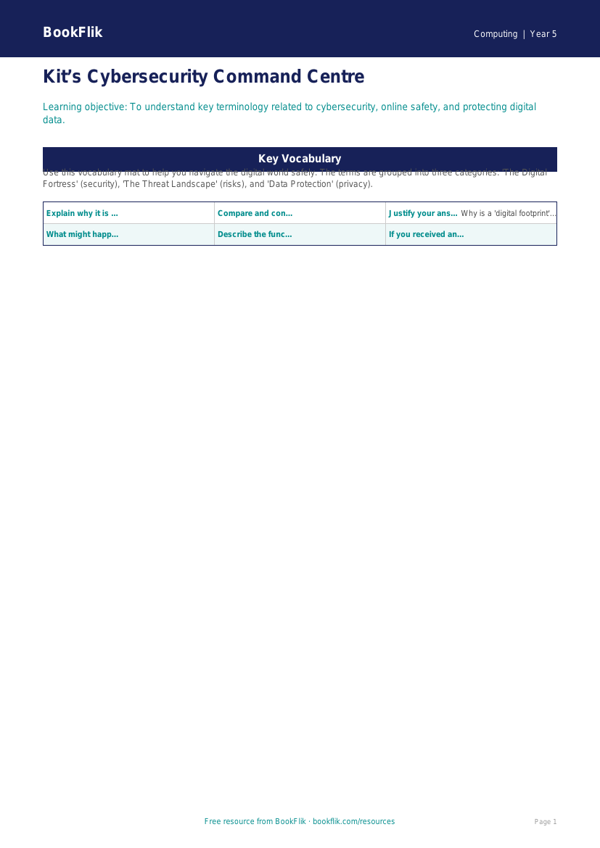
This differentiated material is crafted for gifted and talented learners, pushing them to engage with higher-order thinking. Beyond identifying terms, pupils are challenged with six extension questions designed for greater depth:
1. Explain why two-factor authentication is more secure than a single, complex password.
2. Compare and contrast the potential impact of a virus versus a worm on a school network.
3. Justify your answer: Is it possible for a secure website to be compromised? Why or why not?
4. What might happen if an organisation fails to encrypt sensitive user data?
5. Analyse the role of social engineering in modern cyber attacks.
6. Design a hypothetical protocol for a secure digital classroom and explain the importance of each step.
By integrating this vocabulary-rich resource, you provide your most capable students with the tools to master the language of modern computing, fostering critical thinking and a robust understanding of the digital landscape.
Preview the worksheet
If the preview does not load, open the PDF in a new tab.