
Free E-Safety Flashcards | Year 5 Greater Depth | BookFlik
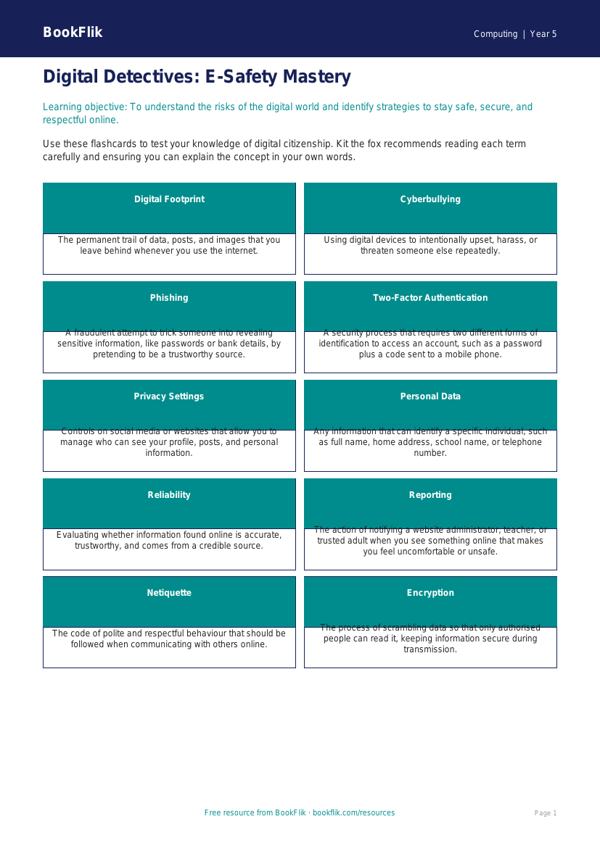
Boost your classroom engagement with our premium set of Computing e safety flashcards year 5 greater depth, designed specifically for pupils ready to move beyond basic digital awareness. As children navigate the increasingly complex digital landscape, it is vital they understand the nuances of online behaviour, data privacy, and the implications of their digital footprint.
These Computing e safety flashcards year 5 greater depth are expertly crafted to align with the UK National Curriculum, focusing on the KS2 programme of study requirement to use technology safely, respectfully, and responsibly. While standard resources often focus on simple rules, our set encourages higher-order thinking, prompting students to analyse complex scenarios involving cyberbullying, the reliability of information, and the ethics of social networking.
Each card features an original challenge featuring Kit the fox, our clever computing expert. Teachers can use these as a starter activity to spark debates, as a carousel task for collaborative problem-solving, or as individual extension challenges for gifted and talented learners. The pack includes thought-provoking prompts that require students to justify their decisions, compare the risks of different platforms, and evaluate the consequences of sharing personal information.
By incorporating these Computing e safety flashcards year 5 greater depth into your weekly routine, you foster a culture of critical thinking rather than passive learning. The differentiation is built into the questioning style; rather than closed answers, students are invited to explain why certain digital actions are risky and what might happen if specific security measures were neglected. Whether used in small group interventions or as a whole-class discussion tool, these flashcards provide a sophisticated framework for teaching digital literacy. Download this comprehensive resource today to empower your students to become ethical, cautious, and informed digital citizens, ensuring they are fully equipped for the transition to secondary school computing.
Preview the worksheet
If the preview does not load, open the PDF in a new tab.