
Free Prototyping Assessment | Year 5 Core | BookFlik
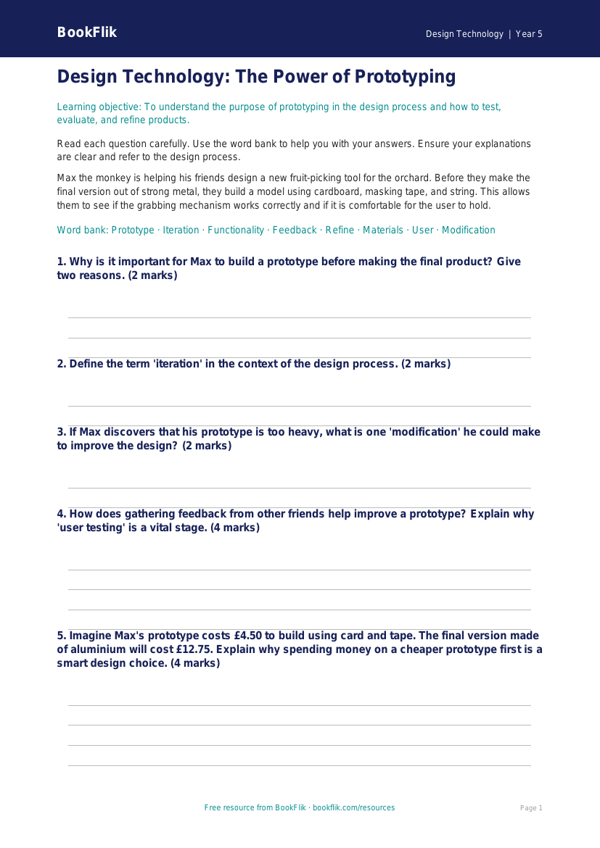
Boost your classroom resources with our comprehensive Design Technology prototyping assessment year 5 core pack. Designed specifically for the UK National Curriculum, this resource provides a structured way to evaluate pupils’ understanding of the iterative design process. As children progress through Year 5, they are expected to move beyond simple ideas and learn how to refine their concepts through testing and evaluation. This assessment helps teachers identify how well students can translate their sketches into functional models and justify their design choices.
Our Design Technology prototyping assessment year 5 core resource includes a variety of tasks that challenge pupils to think like engineers. Students will explore the importance of selecting suitable materials, identifying structural weaknesses, and recording improvements. By using this Design Technology prototyping assessment year 5 core, educators can ensure that their class meets the statutory requirements for developing, planning, and communicating ideas.
The pack features five to seven carefully crafted questions, ranging from recall-based inquiries about tools and materials to application-based tasks where pupils must suggest how to strengthen a prototype. Whether you are using this as a mid-unit check or a final summative evaluation, the clear layout makes it perfect for assessing progress against expected standards.
This material is written in British English and uses relevant currency examples, such as budgeting for prototype materials in pounds and pence, to provide real-world context for young learners. The assessment is fully differentiated for the core level, ensuring that it is accessible yet challenging for the average Year 5 learner. With clear instructions and curriculum-aligned objectives, teachers can save valuable preparation time while gaining meaningful insights into their students’ design capabilities. Download this essential tool today to help your pupils build confidence in their creative problem-solving skills and master the fundamental stages of the design cycle in a supportive, engaging way.
Preview the worksheet
If the preview does not load, open the PDF in a new tab.