
Free Bonfire Night Poster | Year 3 Greater Depth | BookFlik
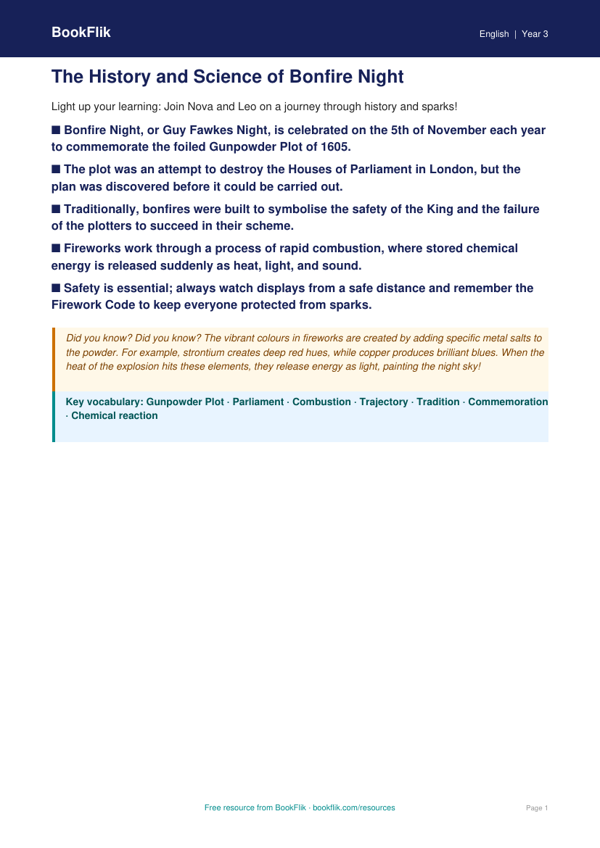
Ignite your pupils’ imaginations this November with our captivating classroom resource. Designed specifically for high-achieving learners, this English bonfire night poster year 3 greater depth activity moves beyond simple firework descriptions to explore the nuances of sensory language, historical context, and persuasive writing.
This educational poster serves as a vibrant anchor chart, showcasing a collection of sophisticated vocabulary—such as incandescent, cacophony, and silhouette—to help children elevate their creative writing. By focusing on the historical significance of the Gunpowder Plot, the resource aligns perfectly with the UK National Curriculum requirements for Year 3 English, specifically focusing on the use of expanded noun phrases, precise adjectives, and the development of a rich, varied vocabulary.
Teachers can use this English bonfire night poster year 3 greater depth display as a catalyst for creative writing workshops. It is ideal for independent study or small group tasks where pupils are encouraged to craft their own atmospheric narratives. The resource is meticulously differentiated; while it provides clear examples for all, the reverse side includes a set of challenge questions designed to stretch gifted and talented learners. These tasks include:
1. Explain why the author chose the word cacophony instead of loud to describe the fireworks.
2. Compare and contrast the atmosphere of a quiet, starry night with the chaos of a firework display.
3. Justify your choice of adjectives when describing the flickering light of a bonfire.
4. What might happen if a character in your story witnessed the event without understanding its historical context?
5. Write a short, poetic stanza using personification to describe the dancing flames.
6. Create a persuasive argument explaining why modern firework safety is essential for communities.
Download this English bonfire night poster year 3 greater depth resource today to inspire your class, foster critical thinking, and transform simple observations into truly evocative, high-quality descriptive prose.
Preview the worksheet
If the preview does not load, open the PDF in a new tab.