
Free Easter Story Poster | Year 5 Greater Depth | BookFlik
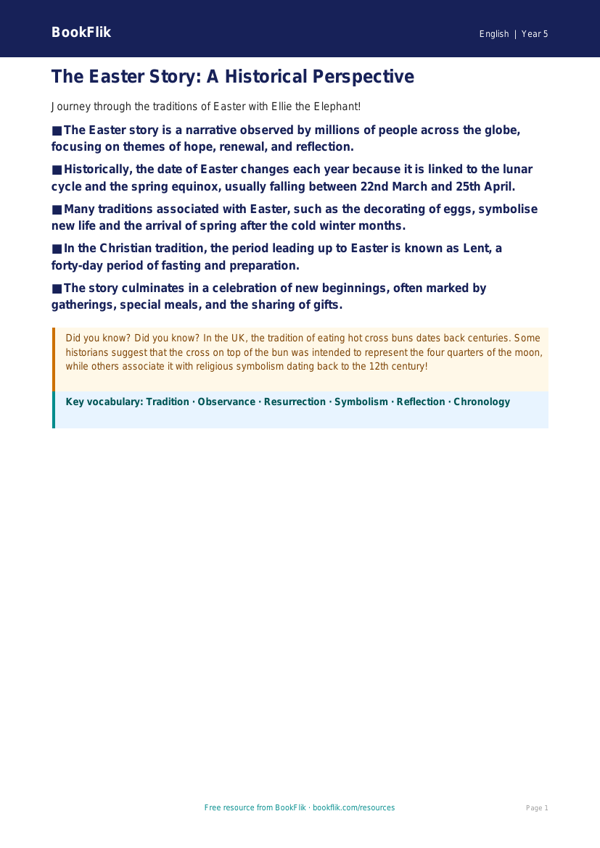
Enhance your classroom walls with our comprehensive English easter story poster year 5 greater depth resource. Designed specifically for Year 5 pupils, this vibrant educational tool moves beyond simple narrative retelling to encourage sophisticated literary analysis. As children explore the traditional Easter narrative, they will engage with advanced vocabulary, complex sentence structures, and the nuances of thematic symbolism, ensuring they meet and exceed the expectations of the UK National Curriculum for English.
This English easter story poster year 5 greater depth resource is perfect for teachers aiming to stretch their gifted and talented learners. Instead of basic comprehension, the poster provides prompts that challenge pupils to evaluate character motivations, identify shifts in tone, and analyse the impact of descriptive language. Whether used as a focal point for whole-class discussion or as a scaffold for independent writing tasks, this resource fosters critical thinking and academic rigour.
By integrating this English easter story poster year 5 greater depth tool into your spring term planning, you provide students with the opportunity to explore historical perspectives and literary themes in a sophisticated manner. It is ideal for fostering high-order thinking skills, such as justifying interpretations of narrative arcs and comparing different accounts of the same event.
The poster includes 8 challenging questions designed for deeper learning:
1. Explain why the author chose specific emotive language to describe the changing atmosphere of the setting.
2. Compare and contrast the different perspectives of the characters involved in the narrative.
3. Justify your answer regarding the primary theme of the story using evidence from the text.
4. What might happen if the story were set in a modern-day environment? How would the narrative change?
5. Analyse the use of metaphor within the text and explain its significance.
6. Create an original piece of poetry that captures the emotional climax of the story.
7. Evaluate the historical context of the events described.
8. How does the author build tension throughout the sequence of events?
Preview the worksheet
If the preview does not load, open the PDF in a new tab.