
Free Sentence Structure Flashcards | Year 6 Core | BookFlik
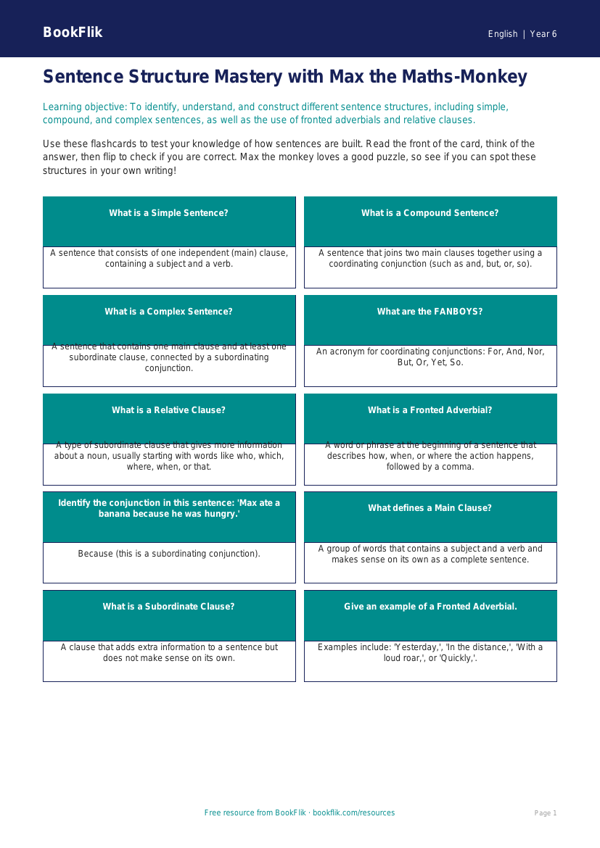
Boost your classroom resources with our comprehensive English sentence structure flashcards year 6 core collection. Designed specifically for pupils working at the expected standard, these high-quality printable cards help children master the complexities of advanced grammar and syntax. Whether you are prepping for end-of-key-stage assessments or reinforcing daily lessons, these English sentence structure flashcards year 6 core materials provide the perfect balance of challenge and clarity.
Each card features a clear, bite-sized explanation followed by an engaging activity. Pupils will explore how to use subordinate clauses, fronted adverbials, and passive voice to elevate their writing. By using these English sentence structure flashcards year 6 core sets, students can practise identifying parts of speech, transforming sentences from active to passive, and experimenting with varied sentence lengths for specific effects.
These flashcards align perfectly with the UK National Curriculum requirements for Year 6, focusing on the sophisticated use of punctuation and grammatical structures. Teachers can use these for quick-fire starter activities, small group interventions, or as a fun independent revision game. Because they are differentiated for the core expected standard, they provide the ideal level of scaffolding for learners who are ready to refine their technical writing skills.
Our character, Max the monkey, loves turning grammar into a puzzle, and these cards do exactly that! They are designed to be warm, encouraging, and easy to use in any classroom setting. Download this free resource today to help your students build confidence in their writing.
Questions for your class:
1. Identify the subordinate clause in this sentence: Although it was raining, the children played football.
2. Rewrite this sentence in the passive voice: The chef prepared a delicious meal.
3. Add a fronted adverbial to this sentence: The lion roared loudly.
4. Explain why a semicolon is used in this sentence: Max loves maths; he enjoys solving puzzles.
5. Combine these two sentences using a relative pronoun: The book is on the shelf. The book is very old.
Preview the worksheet
If the preview does not load, open the PDF in a new tab.