
Free Shopping Track Sheet | Year 3 Core | BookFlik
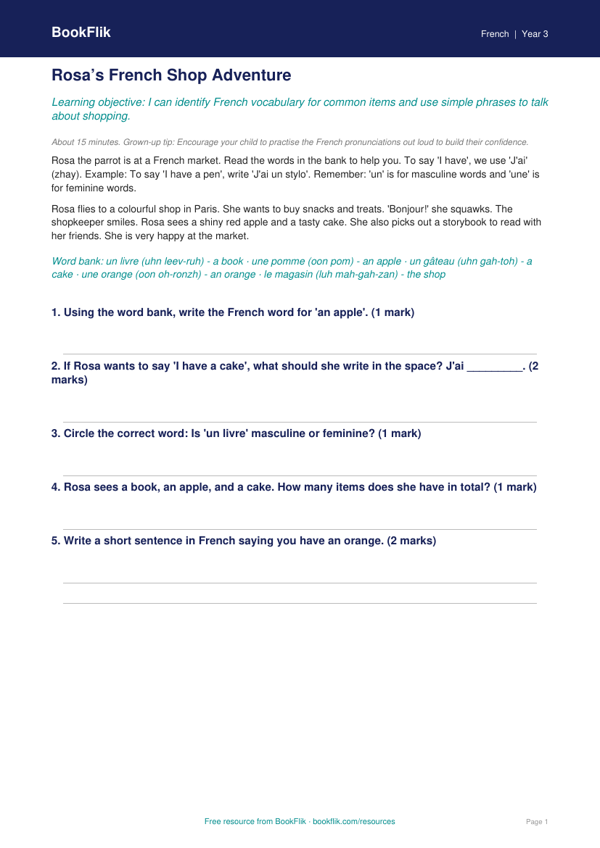
Boost your classroom or home learning with our engaging French shopping track sheet year 3 core resource. Designed specifically for Key Stage 2 learners, this colourful and interactive activity helps children master essential French vocabulary related to buying food and items at a market. By using this French shopping track sheet year 3 core, pupils will practise naming common fruits, vegetables, and everyday goods while learning how to ask for items politely in French.
Our resource features Rosa, our bilingual parrot, who guides children through the pronunciation of key phrases. The sheet includes a helpful price list in pounds and pence, allowing children to apply their maths skills to a French context. Whether you are a teacher planning a lesson on the French language or a parent supporting your child at home, this French shopping track sheet year 3 core offers a structured and fun way to build confidence.
This resource is fully aligned with the UK National Curriculum for languages, focusing on conversational skills and basic vocabulary acquisition. It is designed at the core level, which is the expected standard for Year 3 pupils. The tasks are varied to keep learners motivated, including matching activities, simple role-play scripts, and a challenge to calculate the total cost of a shopping basket.
Teachers can use this sheet during break time activities or as a starter for a French topic. Parents will find it perfect for rainy afternoons or weekend practice. The clear layout ensures that children can work independently, while the inclusion of familiar items like apples, bread, and milk makes the learning feel relevant to their daily lives in the UK. Download this free, high-quality resource today to help your students or children develop their speaking and listening skills while exploring a new language in a warm and supportive way.
How to use this track sheet
- Time: about 15 minutes
- At home: Encourage your child to practise the French pronunciations out loud to build their confidence.
- In the classroom: Use this as a plenary task to reinforce the difference between ‘un’ and ‘une’ through repetition.
Preview the worksheet
If the preview does not load, open the PDF in a new tab.