
Free Composition Flashcards | Year 5 Greater Depth | BookFlik
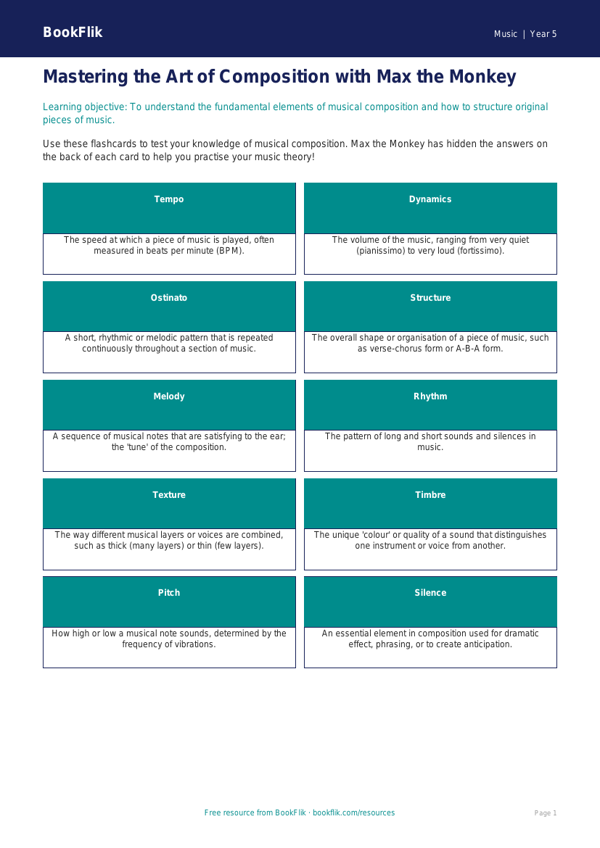
Unlock the creative potential of your classroom with our premium Music composition flashcards year 5 greater depth resource. Designed specifically for Year 5 pupils, these materials move beyond basic rhythm and pitch, encouraging students to explore the intricate architecture of musical structure. By using these Music composition flashcards year 5 greater depth, learners will investigate complex concepts such as ostinato, syncopation, and the use of dynamics to convey specific moods or narratives.
Each card features a challenge inspired by Max the monkey, who loves to break down musical patterns into logical sequences. Pupils will learn how to layer textures, manipulate tempo, and experiment with timbre to create original pieces that reflect their own unique ideas. These resources are perfectly aligned with the UK National Curriculum for Music, which mandates that children should improvise and compose music for a range of purposes using the interrelated dimensions of music.
Teachers can integrate these Music composition flashcards year 5 greater depth into starter activities, small-group workshops, or as an extension task for gifted and talented learners. The set includes six higher-order thinking questions designed to stretch cognitive abilities:
1. Explain why a composer might choose a minor key to accompany a scene of suspense or mystery.
2. Compare and contrast the effect of staccato versus legato articulation on the overall character of a melody.
3. Justify your decision to use a specific time signature for a piece intended to make the listener feel like they are marching.
4. What might happen if you removed the percussion layer from your composition? How would the energy change?
5. Analyse how repeating a rhythmic motif can create a sense of unity in a musical work.
6. Creative Extension: Compose a short motif representing a thunderstorm, then invert the melody—how does the mood change when the intervals are reversed?
Foster a love for musical theory and creative expression with this comprehensive, teacher-led resource.
Preview the worksheet
If the preview does not load, open the PDF in a new tab.