
Free Pitch Poster | Year 5 Core | BookFlik
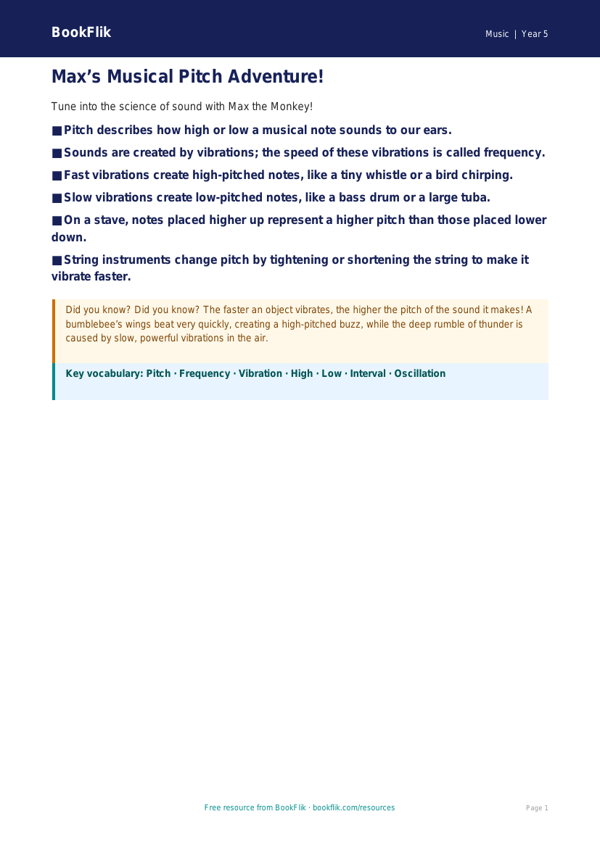
Bring the magic of sound into your classroom with our vibrant Music pitch poster year 5 core. Designed specifically for Year 5 pupils, this visual aid helps children master the fundamental concepts of pitch, movement, and frequency. This resource is an essential tool for any primary music lesson, offering a clear and engaging way to explain how sounds can be high or low depending on the vibrations of an instrument or voice.
Using this Music pitch poster year 5 core, teachers can demonstrate the relationship between the size of an instrument and the pitch it produces. For example, pupils will learn that smaller, tighter strings or shorter air columns often create higher pitches, while larger, looser objects produce lower, deeper sounds. The poster is perfectly aligned with the UK National Curriculum for music, which encourages children to appreciate and understand the dimensions of sound. Whether you are leading a whole-class singing session or exploring orchestral instruments, this resource provides the perfect reference point to keep your students focused and inspired.
This resource is tailored for learners working at the expected standard for Year 5. It features clear, age-appropriate language and colourful illustrations that simplify complex acoustic principles. By displaying this Music pitch poster year 5 core in your music room or learning space, you help students develop their musical vocabulary and listening skills.
In addition to the poster, we have included five comprehension questions to test understanding:
1. What is the difference between a high pitch and a low pitch?
2. If you pluck a very thin string on a guitar, will the pitch be high or low?
3. Why does a large drum produce a lower sound than a small bell?
4. How can you change the pitch of your own voice while singing?
5. Which instrument in the classroom produces the lowest pitch you can find?
Download this free resource today to help your class explore the fascinating science behind every melody.
Preview the worksheet
If the preview does not load, open the PDF in a new tab.