
Free Tempo Template | Year 4 Supported | BookFlik
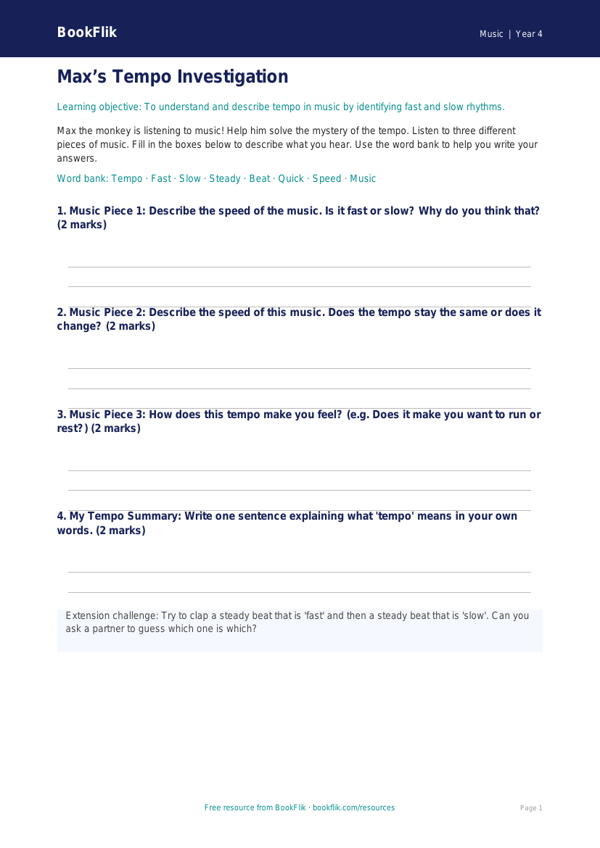
Boost your classroom music lessons with our free Music tempo template year 4 supported resource. Designed specifically for pupils who need extra scaffolding, this activity helps children understand the speed of music in an accessible and engaging way.
In this lesson, students will learn to identify and describe tempo, which is the speed at which a piece of music is played. By using our Music tempo template year 4 supported, learners will explore the difference between fast (allegro) and slow (lento) paces. This resource aligns perfectly with the UK National Curriculum for Year 4, which requires children to understand and use musical terminology to describe different features of sound.
Teachers can use this template to support students during listening exercises. The resource includes clear visual cues, such as icons representing a tortoise for slow music and a hare for fast music, to help pupils connect concepts to physical movement. Because this is a Music tempo template year 4 supported, we have included simplified vocabulary and clear, structured answer boxes. This ensures that every child can participate confidently, regardless of their current reading or musical ability.
The worksheet provides sentence starters to help children articulate their ideas, such as The music sounds… or The tempo is… This helps build confidence and encourages students to use technical language correctly. Whether you are leading a whole-class listening activity or working in a small group, this template provides the perfect framework to make music theory simple and fun.
Download this essential teaching tool today to help your Year 4 students master the concept of tempo. Our materials are designed to be warm, encouraging, and easy to use, ensuring that every learner feels successful during their creative musical journey. Support your pupils with our structured, inclusive approach to the primary music curriculum.
Preview the worksheet
If the preview does not load, open the PDF in a new tab.