
Free Feelings Template | Year 4 Core | BookFlik
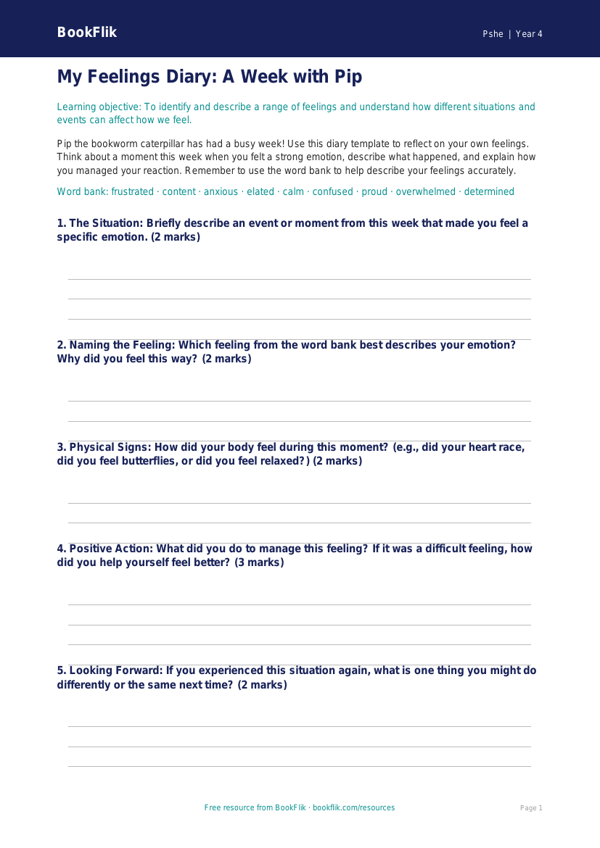
Boost your classroom wellbeing sessions with our comprehensive Pshe feelings template year 4 core resource. Designed specifically for the UK National Curriculum, this template helps pupils identify, label, and articulate a wide range of emotions, fostering emotional literacy and empathy.
In Year 4, children are developing a deeper understanding of how their feelings influence their behaviour and interactions with others. This Pshe feelings template year 4 core provides a structured way for students to explore complex emotions beyond basic categories like happy or sad. Through guided prompts, pupils will learn to recognise the physical sensations associated with different moods, develop healthy coping strategies, and practise active listening when discussing feelings with peers.
Teachers can use this versatile resource as a springboard for circle time discussions, a reflective journaling tool, or as part of a dedicated lesson on emotional regulation. Whether working in small groups or as a whole class, the clear layout ensures that every student can engage with the material. By using this Pshe feelings template year 4 core, educators can create a safe, supportive space where children feel comfortable sharing their thoughts and learning how to manage their wellbeing effectively.
Aligned with the statutory requirements for Relationships Education, this resource ensures you are meeting curriculum goals while keeping content engaging and relevant. It is specifically differentiated for learners working at the expected standard, ensuring the language and tasks are perfectly pitched for nine-year-olds.
The resource includes 5 to 7 varied questions designed to test recall and encourage personal application:
1. Can you name three different emotions and describe where you feel them in your body?
2. If a friend was feeling frustrated, what kind words could you say to them?
3. What is one healthy activity you can do when you feel overwhelmed?
4. How do your feelings change throughout a typical school day?
5. Why is it important to listen to others when they share their feelings?
6. Can you match these scenarios to the correct emotion?
7. Write a short plan of action for when you feel nervous about a new challenge.
Preview the worksheet
If the preview does not load, open the PDF in a new tab.