
Free Money Word Mat | Year 5 Greater Depth | BookFlik
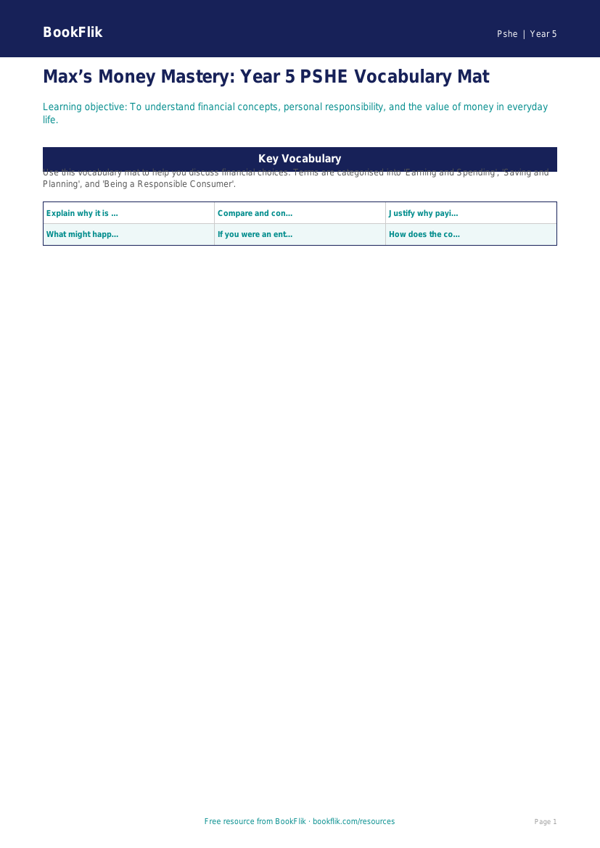
Boost your classroom financial literacy lessons with our comprehensive Pshe money word mat year 5 greater depth resource. Designed specifically for Year 5 pupils, this vibrant and engaging tool provides the essential vocabulary required to navigate complex discussions about personal finance, budgeting, and the value of money within the UK National Curriculum framework.
Students will explore sophisticated terminology, moving beyond basic concepts to understand economic principles such as interest, inflation, credit, debt, and ethical spending. By integrating this Pshe money word mat year 5 greater depth into your lessons, you empower children to articulate their understanding of how money moves through society and the importance of making informed financial decisions.
Teachers can use this resource as a scaffold for group debates, creative writing tasks about entrepreneurship, or as a reference guide during role-play activities where children manage hypothetical budgets. Because it is tailored for high-achieving learners, the Pshe money word mat year 5 greater depth includes nuanced terms that challenge students to think critically about the difference between needs and wants, the impact of charitable giving, and the long-term implications of saving versus spending.
This resource supports the PSHE Association programmes of study, focusing on economic wellbeing and the role of money in our lives. It is perfect for mixed-ability classrooms, offering the perfect level of stretch for gifted and talented students who are ready to engage with higher-order thinking.
The mat includes six challenging questions to promote deep learning:
1. Explain why interest rates might influence an individual’s decision to save money.
2. Compare and contrast the benefits of using a debit card versus a credit card.
3. Justify your answer: Is it always better to buy the cheapest version of an item?
4. What might happen if a person does not budget for unexpected costs?
5. How does inflation change the value of £1 over time?
6. Create a proposal for a new community business; how will you ensure it remains sustainable?
Preview the worksheet
If the preview does not load, open the PDF in a new tab.