
Free Easter Writing Frame | Year 3 Core | BookFlik
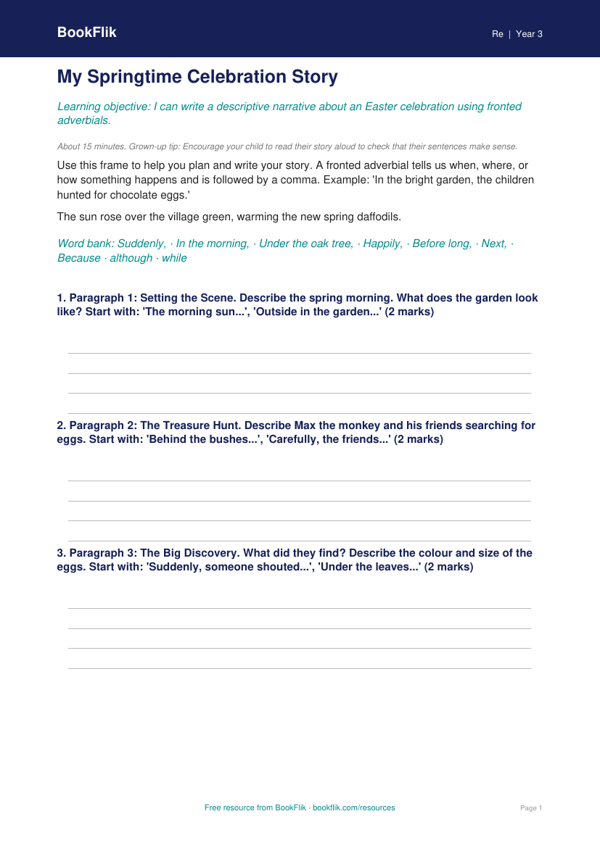
Celebrate the spring season with our engaging RE easter writing frame year 3 core resource. This free printable is designed to help children explore the significance of Easter within the Christian faith. As pupils in Year 3 begin to understand different religious traditions, this activity provides a structured way for them to reflect on the themes of new life, hope, and the Easter story.
The RE easter writing frame year 3 core is perfectly aligned with the UK National Curriculum for Religious Education. It supports children in developing their descriptive writing skills while encouraging thoughtful reflection on why Easter is a special time for many people. The frame includes prompts to help students identify key symbols like the egg or the cross and explains their meanings in a child-friendly way. Whether you are a teacher planning a lesson for the end of the spring term or a parent looking for home learning activities, this resource is a fantastic addition to your collection.
Our RE easter writing frame year 3 core is crafted specifically for children aged 7 to 8. It features clear, accessible language and space for students to write about their own observations of spring, such as the blooming of daffodils or the return of the robin. By using this writing frame, students will learn to articulate their thoughts clearly and gain a better understanding of how others celebrate this important festival.
Teachers can use this resource during literacy or RE lessons to spark group discussions about traditions in London, Cardiff, or their local village. It is designed at the expected standard for Year 3, ensuring it provides just the right level of challenge. For children who finish quickly, we have included an extension task to write a short poem about the arrival of spring. Download this helpful tool today to bring a sense of seasonal wonder into your classroom or home.
How to use this writing frame
- Time: about 15 minutes
- At home: Encourage your child to read their story aloud to check that their sentences make sense.
- In the classroom: Remind students to check for their comma after every fronted adverbial.
Preview the worksheet
If the preview does not load, open the PDF in a new tab.