
Free Sacred Texts Word Mat | Year 5 Core | BookFlik
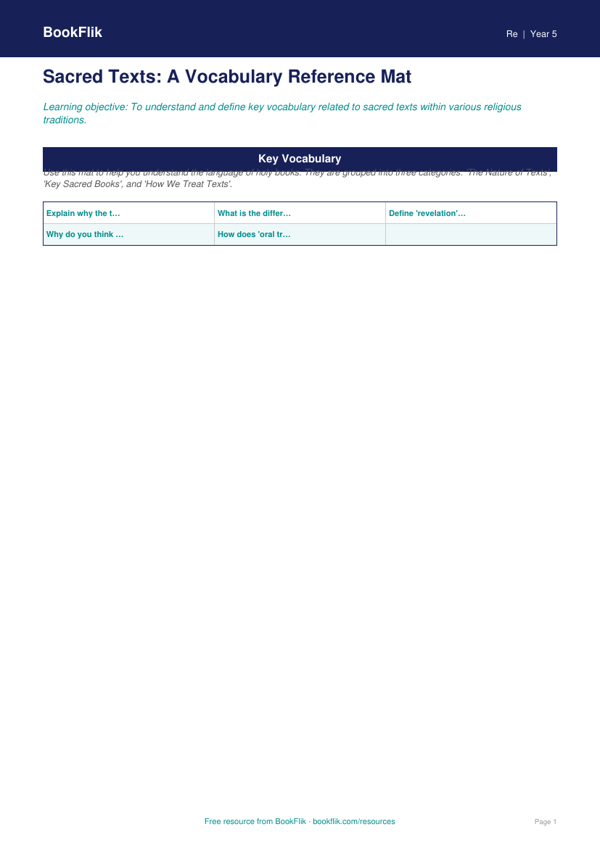
Boost your religious education lessons with our comprehensive RE sacred texts word mat year 5 core resource. Designed specifically for Year 5 pupils, this vibrant and accessible tool helps children navigate the complex vocabulary associated with the holy books of world religions. Whether you are exploring the Torah, the Bible, the Quran, the Guru Granth Sahib, or the Vedas, this resource provides the essential terminology needed to discuss these texts with confidence and respect.
This RE sacred texts word mat year 5 core is perfectly aligned with the UK National Curriculum, which expects pupils to understand how sacred texts are used, interpreted, and revered within different faith communities. By providing clear definitions for terms like revelation, scripture, manuscript, and interpretation, this mat supports students as they compare the significance of holy books across various traditions. It is an ideal companion for independent writing tasks, group discussions, or classroom displays.
Teachers can use this resource to scaffold learning during literacy-based RE lessons. It is especially useful for helping children articulate their thoughts when writing comparative essays or reflecting on the historical context of religious writings. Because it is a core-level resource, the vocabulary is pitched precisely at the expected standard for nine and ten-year-olds, ensuring it is challenging enough to promote progress without causing frustration.
Our RE sacred texts word mat year 5 core includes five engaging questions to test understanding: 1. Define what is meant by a sacred text. 2. Why do some religions treat their holy books with special care? 3. Explain the difference between a manuscript and a printed book. 4. How might two people interpret the same passage differently? 5. Why is oral tradition often important alongside written scripture? Download this free, original resource today to foster a deeper, more thoughtful understanding of religious literature in your classroom.
Preview the worksheet
If the preview does not load, open the PDF in a new tab.