
Free Habitats Template | Year 4 Core | BookFlik
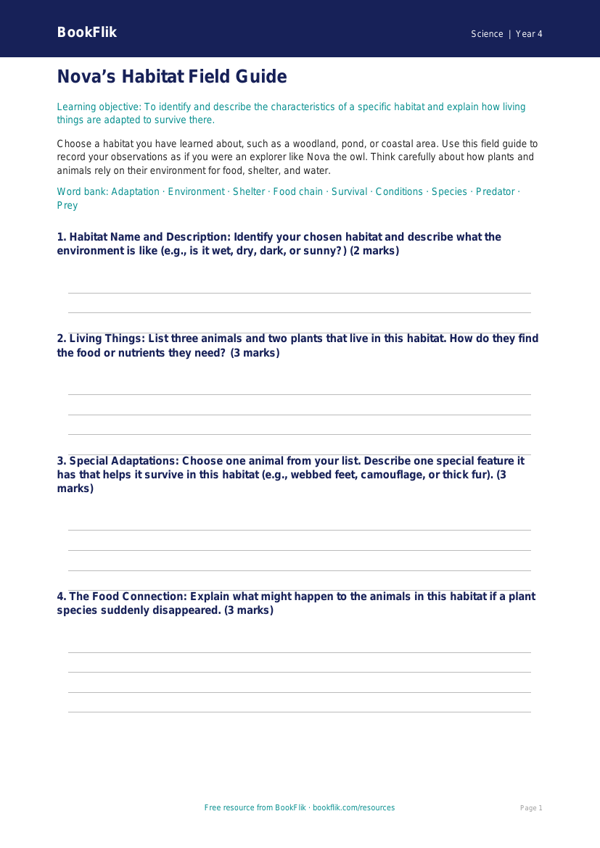
Explore the fascinating world of ecosystems with our comprehensive Science habitats template year 4 core resource. Designed specifically for teachers following the UK National Curriculum, this engaging pack helps pupils understand how living things are classified and how environments provide for the needs of animals and plants.
Our Science habitats template year 4 core introduces children to the concept of classification keys and food chains. Through the eyes of Bea the honeybee, pupils will discover why specific animals are suited to their local environment and how human impact can change these delicate spaces. Whether exploring a woodland, a pond, or a hedgerow, this resource encourages children to observe, record, and analyse the natural world around them.
Teachers can use this versatile Science habitats template year 4 core to structure outdoor learning sessions or as a brilliant visual aid for classroom discussions. The pack includes five to seven carefully crafted questions that challenge students to recall facts about life cycles, apply their knowledge to new scenarios, and comprehend the interconnected nature of ecosystems. Because it is designed at the expected standard for Year 4, the language is clear, accessible, and perfectly aligned with current primary school expectations.
This resource supports the National Curriculum requirement for pupils to recognise that living things can be grouped in a variety of ways and explore how environments can change, which can sometimes pose dangers to living things. With a focus on scientific enquiry and observation, students will develop their skills in identifying characteristics of different habitats.
Download this free teaching tool today to bring your science lessons to life. It is the perfect way to inspire curiosity in your classroom, help students master key vocabulary, and ensure every child feels confident in their understanding of the natural world. Start your journey into the wild today with our expert-designed materials.
Preview the worksheet
If the preview does not load, open the PDF in a new tab.