
Free Skeleton And Muscles Writing Frame | Year 5 Core | BookFlik
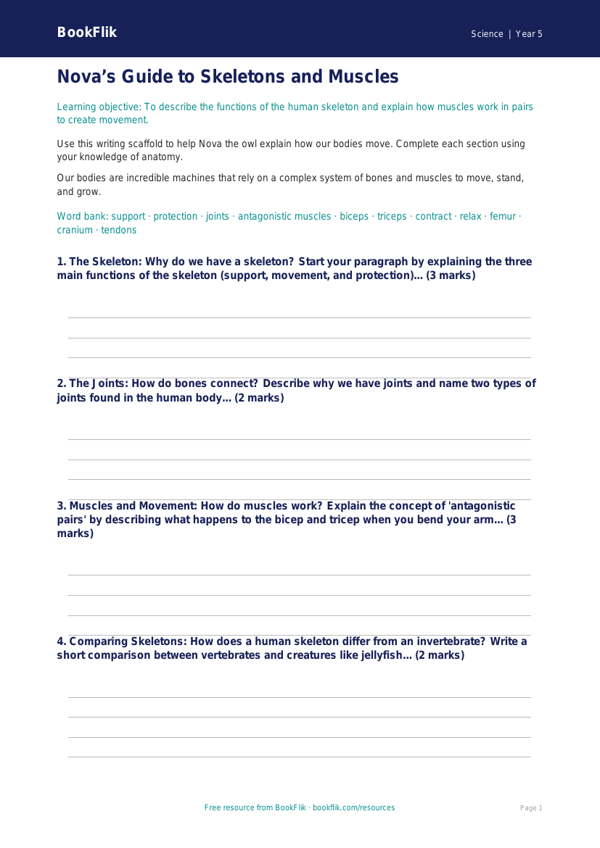
Boost your classroom resources with our expertly designed Science skeleton and muscles writing frame year 5 core. This free, printable resource is specifically tailored for Year 5 pupils working at the expected standard, helping them structure their scientific explanations with clarity and confidence.
In line with the UK National Curriculum, this activity supports pupils in identifying that humans and some other animals have skeletons and muscles for support, protection, and movement. By using this Science skeleton and muscles writing frame year 5 core, students will learn how to describe the functions of the human skeleton, explain how muscles work in pairs to move joints, and identify key organs protected by the ribcage and skull.
Teachers can use this versatile tool as a scaffolded summary task after a practical lesson or as a formative assessment to check understanding of biological systems. The frame includes clear headings, sentence starters, and a vocabulary bank to ensure pupils use precise terminology such as joints, tendons, and biceps. Because this Science skeleton and muscles writing frame year 5 core is designed specifically for the core ability range, it provides just the right amount of support to encourage independent thinking while maintaining high expectations for scientific literacy.
The resource includes 5 to 7 engaging questions that move from simple recall—such as naming the bones that protect the heart—to application tasks, where students must explain the consequences of a muscle injury. Our original character, Nova the owl, guides the children through the worksheet, offering encouraging prompts to help them articulate their findings about the musculoskeletal system.
Download this resource today to save time on lesson planning while ensuring your students meet their curriculum milestones. It is the perfect addition to any unit on animals, including humans, providing a structured approach to writing that helps every child succeed in their scientific studies.
Preview the worksheet
If the preview does not load, open the PDF in a new tab.