
Free Spring Science Activity Sheet | Year 5 Greater Depth | BookFlik
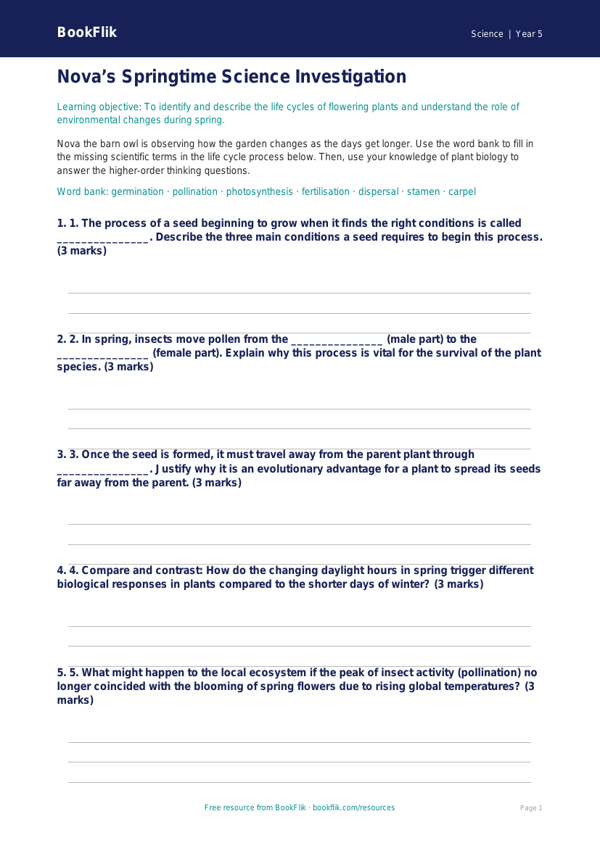
Unlock the wonders of the natural world with our comprehensive Science spring science activity sheet year 5 greater depth resource. Designed specifically for ambitious learners, this curriculum-aligned pack invites pupils to explore the biological processes that define the turning of the seasons. Featuring our resident nature expert, Bea the honeybee, this resource moves beyond basic life cycles to investigate the complex environmental triggers that dictate spring growth in the United Kingdom.
This Science spring science activity sheet year 5 greater depth is meticulously crafted to meet the UK National Curriculum requirements for Year 5 Science, specifically focusing on the life cycles of plants and animals. While core tasks cover foundational knowledge, the greater depth sections challenge pupils to analyse data, hypothesise about climate impacts, and explain the intricate relationship between pollinators and flora. Teachers can utilise these materials for guided group discussions, independent research projects, or as an extension task for pupils who require additional cognitive stimulation.
Inside this pack, children will explore the mechanics of germination, the importance of photoperiodism, and the vital role of invertebrates in our ecosystem. By engaging with this Science spring science activity sheet year 5 greater depth, learners will develop their scientific enquiry skills, moving from simple observation to justifying their conclusions using evidence-based reasoning.
The resource includes six high-level challenges, such as:
1. Explain why temperature fluctuations might affect the synchronisation between bee emergence and flower blooming.
2. Compare and contrast the life cycles of different plant species found in your local school grounds.
3. Justify the importance of biodiversity in supporting spring growth.
4. Predict what might happen to local food chains if spring temperatures consistently rise earlier each year.
5. Create a detailed scientific report on a specific spring-flowering plant.
6. Evaluate the impact of human activity on early spring habitats.
Download this resource today to inspire your most inquisitive young scientists.
Preview the worksheet
If the preview does not load, open the PDF in a new tab.