
Free Spring Science Drawing Sheet | Year 5 Core | BookFlik
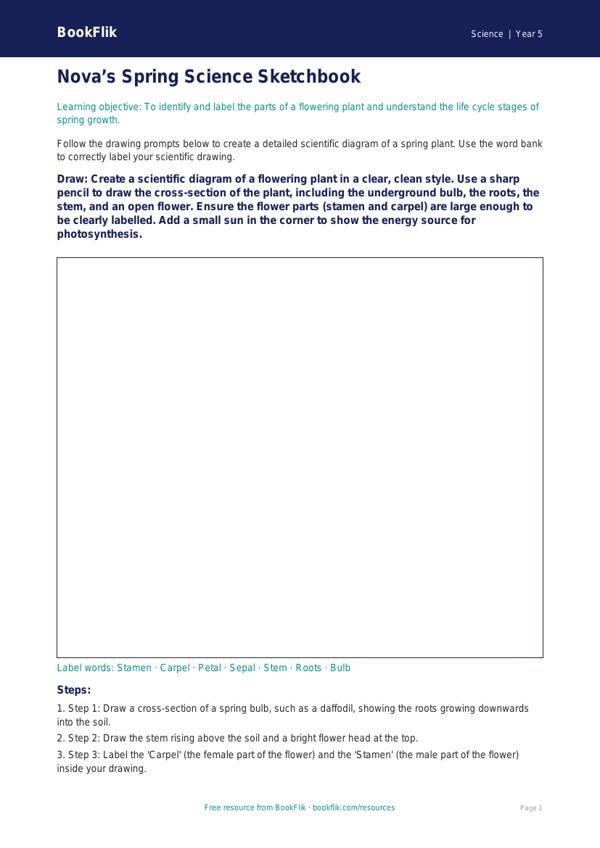
Celebrate the wonders of the natural world with our engaging Science spring science drawing sheet year 5 core resource. Designed specifically for Year 5 pupils, this creative activity encourages children to observe, document, and illustrate the fascinating biological changes that occur as the seasons shift.
In this lesson, pupils will explore the life cycles of plants and animals, focusing on key scientific concepts such as germination, pollination, and the emergence of new life. As they complete their Science spring science drawing sheet year 5 core, students will be prompted to label the parts of a flowering plant and identify the environmental conditions—such as increased sunlight and warmer temperatures—that trigger spring growth. This activity perfectly aligns with the UK National Curriculum requirement for pupils to describe the life process of reproduction in some plants and animals.
Teachers can use this resource as a bridge between classroom theory and outdoor learning. It is ideal for a spring-themed science lesson or as a follow-up to a nature walk around the school grounds. By combining artistic expression with scientific observation, pupils are better able to retain information about plant anatomy and seasonal cycles. Our Science spring science drawing sheet year 5 core is pitched at the expected standard for Year 5, ensuring that the vocabulary and tasks are appropriately challenging yet accessible for all learners.
The resource includes a series of thought-provoking questions to deepen understanding:
1. Label the parts of a flower, including the stamen and carpel.
2. Explain how warmer temperatures affect the growth rate of seeds.
3. List three signs of spring you might observe in your local park.
4. Why is pollination important for the life cycle of a flowering plant?
5. Describe how a butterfly’s life cycle might change as the weather warms up.
Download this free, high-quality resource today to inspire your young scientists to look closer at the world around them.
Preview the worksheet
If the preview does not load, open the PDF in a new tab.