
Free E-Safety Word Mat | Grade 3 | Computing | BookFlik
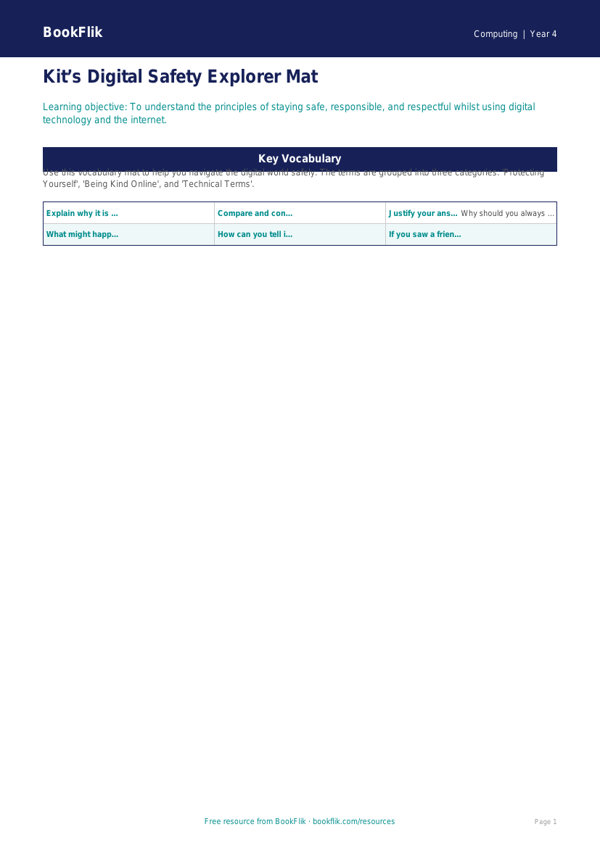
Enhance your classroom digital literacy resources with our premium Computing e safety word mat year 4 greater depth. Designed specifically for ambitious learners in Elementary, this educational tool moves beyond basic online awareness to explore the complex nuances of digital citizenship. This Computing e safety word mat year 4 greater depth empowers pupils to articulate their understanding of sophisticated concepts such as digital footprints, algorithmic bias, and the importance of verifying online information sources.
Aligned perfectly with the Common Core State Standards for Computing, this resource supports pupils in evaluating their online interactions critically. Teachers can utilise this mat as a prompt for high-level classroom discussions, as a scaffold for creative writing tasks regarding digital ethics, or as a reference guide during research projects. By integrating this Computing e safety word mat year 4 greater depth into your lessons, you ensure that even your most advanced learners are challenged to think deeply about the societal impacts of technology.
The content is carefully differentiated to push gifted and talented pupils towards higher-order thinking. Rather than simply defining terms, the mat encourages students to justify their online behaviors and analyze the potential long-term consequences of their digital activity. It serves as an essential companion for any Grade 3 teacher aiming to cultivate responsible, analytical, and forward-thinking digital citizens.
Included are eight challenging activities designed to stretch your pupils:
1. Explain why a digital footprint is considered permanent.
2. Compare and contrast private and personal information.
3. Justify your answer: Why is it vital to report cyberbullying even if it does not affect you directly?
4. What might happen if a computer program is written with an unfair bias?
5. Evaluate the risks of sharing location data in online games.
6. Design a set of rules for a safe, inclusive virtual community.
7. Research and define the term ‘phishing’ and explain how to spot it.
8. Create a persuasive poster explaining the benefits of critical thinking online.
Preview the worksheet
If the preview does not load, open the PDF in a new tab.