
Free Figurative Language Poster | Grade 3 | ELA | BookFlik
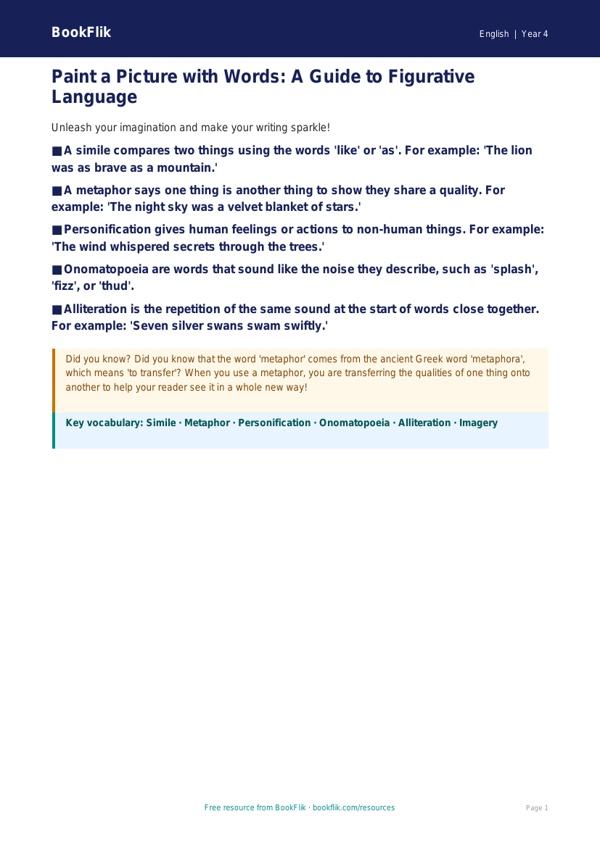
Boost your classroom displays with our vibrant and engaging ELA figurative language poster year 4 core resource. Designed specifically for the Common Core State Standards, this educational tool is perfect for helping primary school students master the art of descriptive writing.
Our colorful poster features our friendly character, Pip the bookworm, who guides children through the essential building blocks of figurative language. By breaking down complex concepts into simple, memorable examples, this ELA figurative language poster year 4 core helps pupils understand how to use similes, metaphors, and personification to bring their stories to life. Whether your students are writing creative narratives or descriptive poetry, this resource provides the visual prompts they need to elevate their vocabulary and improve their sentence structure.
This resource is perfectly aligned with the Grade 3 ELA curriculum requirements, focusing on the use of expanded noun phrases and imaginative devices to create impact. Teachers can use this poster as a focal point for whole-class discussions, a handy reference guide during independent writing tasks, or as part of a literacy working wall. Because it is designed as an ELA figurative language poster year 4 core, it is pitched exactly at the expected standard, ensuring that the terminology is accessible yet challenging enough to support age-related expectations.
In addition to the visual poster, we have included five quick-fire questions to check understanding:
1. Identify the simile in this sentence: The stars shone like tiny lanterns in the night sky.
2. What is being personified in this sentence: The wind whispered secrets through the trees?
3. Rewrite a boring sentence by adding a metaphor.
4. Why do authors use figurative language in their writing?
5. Can you spot the difference between a simile and a metaphor?
Download this free, high-quality resource today to inspire your young writers and transform their creative work with the power of language.
Preview the worksheet
If the preview does not load, open the PDF in a new tab.