
Free Population Template | Grade 3 | Geography | BookFlik
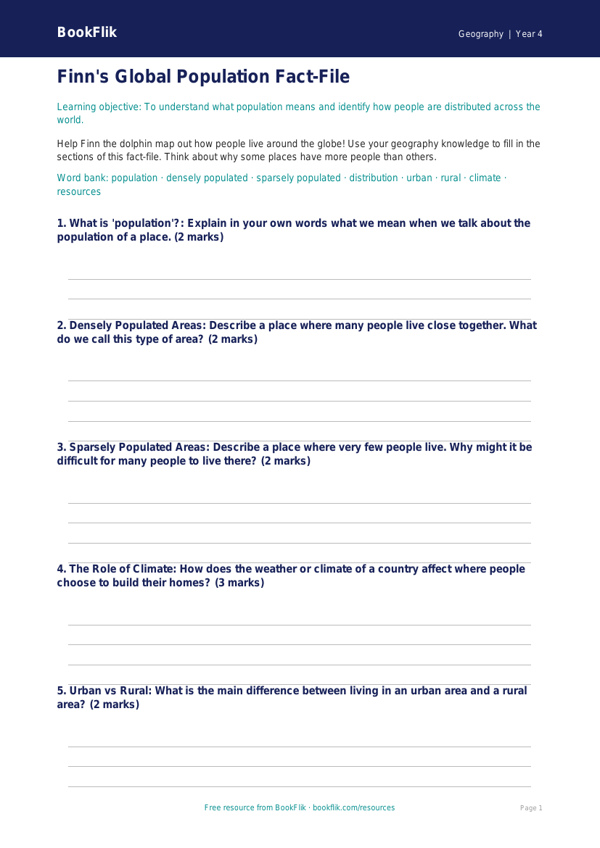
Boost your classroom geography lessons with our comprehensive and engaging Geography population template year 4 core. Designed specifically for Grade 3 students working at the expected standard, this free resource simplifies the complex concept of human population, making it accessible and exciting for eight and nine year olds.
Using this Geography population template year 4 core, children will explore the distribution of people across the globe. They will learn why certain areas are more densely populated than others, identifying the impact of physical geography such as climate, water sources, and terrain. By completing the activities, students will develop a better understanding of the difference between urban and rural settlements and how populations change over time.
Teachers can integrate this resource into a wider geography unit or use it as a standalone lesson to meet Common Core State Standards requirements. The template is designed for ease of use, allowing educators to quickly implement a structured approach to teaching human geography. It encourages critical thinking and data interpretation through clear, age-appropriate prompts.
As a Geography population template year 4 core, this material is differentiated for the core level, ensuring the vocabulary is challenging yet achievable for learners at the expected standard. It balances factual recall with application questions, helping pupils connect global patterns to their own local environment.
This resource aligns perfectly with the Common Core State Standards for Elementary, focusing on human and physical geography. By using this template, you can ensure your students build a solid foundation in understanding how humans interact with the planet. Download this free tool today to provide your Grade 3 class with a clear, structured, and positive learning experience that turns a complex topic into an achievable milestone.
Preview the worksheet
If the preview does not load, open the PDF in a new tab.