
History stone age writing frame grade 3 core
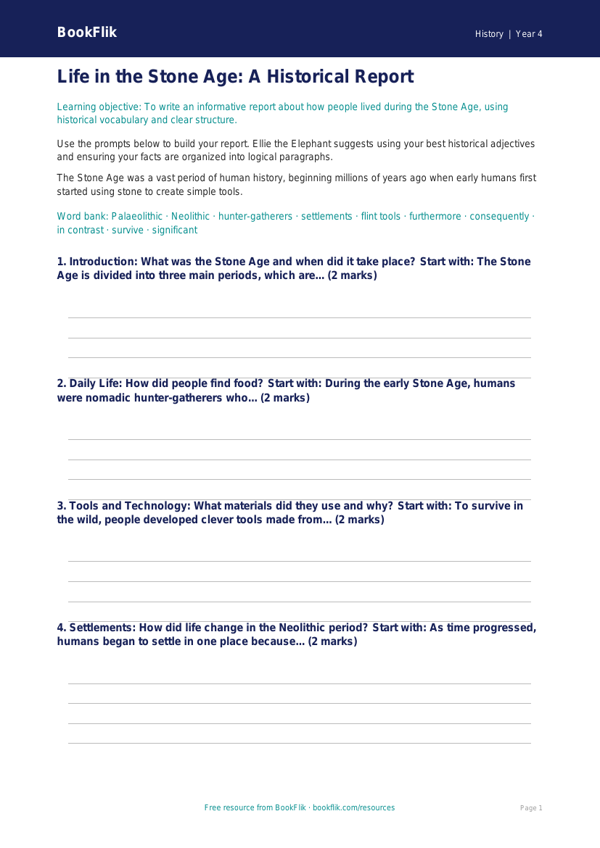
Unlock the secrets of the past with our engaging History stone age writing frame year 4 core resource. Designed specifically for Elementary, this writing frame provides a structured scaffold to help children organize their thoughts, evidence, and historical vocabulary as they explore the fascinating lives of early humans.
In the Common Core State Standards, Grade 3 pupils are expected to develop an understanding of how Britain changed from the Stone Age to the Iron Age. This History stone age writing frame year 4 core helps students bridge the gap between gathering facts and writing cohesive paragraphs. By using this tool, children can categorize their research into key themes, such as daily life, hunting and gathering, shelter, and the transition to farming. Whether they are writing a non-chronological report or a diary entry from the perspective of a Neolithic settler, this frame ensures they hit those essential curriculum targets while building confidence in their writing skills.
Teachers can use this resource as a guided classroom activity to support whole-class discussions or as an independent task during history lessons. Because this History stone age writing frame year 4 core is set at the expected standard, it includes useful word banks and sentence starters that encourage the use of chronological language and historical terminology. It is perfect for helping pupils structure their arguments and descriptions clearly, ensuring their writing remains focused and logical.
Download this free resource to save time on lesson planning while providing your class with a high-quality, professional writing aid. It is a fantastic way to ensure all students can access the curriculum and express their understanding of how our ancestors lived thousands of years ago.
Questions for your pupils:
1. What were the main differences between the Palaeolithic and Neolithic periods?
2. Why was the discovery of fire important for Stone Age survival?
3. How did early humans use natural resources to build their homes?
4. Can you explain the transition from hunting and gathering to farming?
5. Why do historians rely on archaeological evidence to learn about the past?
Preview the worksheet
If the preview does not load, open the PDF in a new tab.