
Free Living Things Quiz | Grade 5 | Science | BookFlik
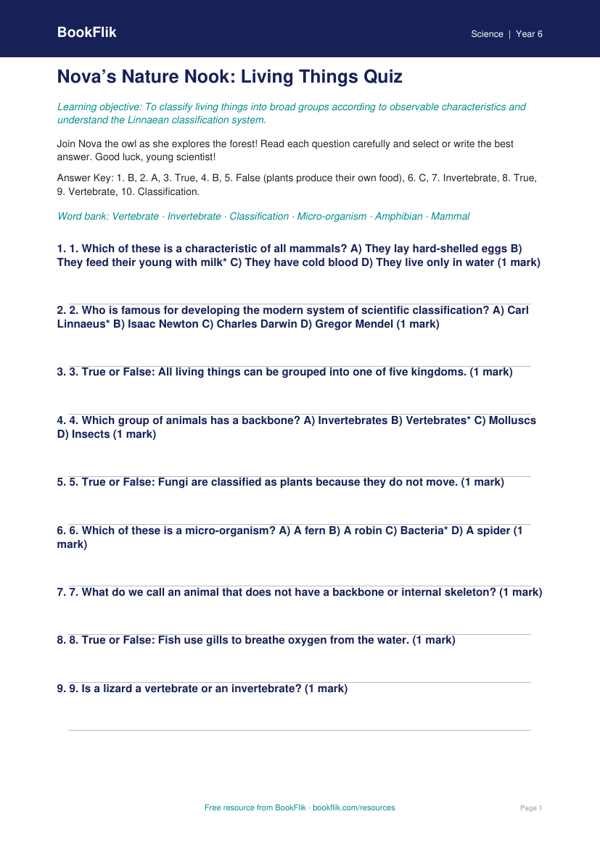
Boost your classroom engagement with our Science living things quiz year 6 core resource. Designed specifically for pupils working at the expected standard, this interactive activity is a perfect way to assess knowledge and consolidate learning about the classification of organisms. This Science living things quiz year 6 core covers the essential requirements of the Common Core State Standards, focusing on how living things are classified into broad groups according to common observable characteristics and based on similarities and differences, including microorganisms, plants, and animals.
Our character, Nova the barn owl, guides learners through the questions, encouraging them to think like scientists as they explore the Linnaean system of classification. The resource includes a mix of question types, ranging from straightforward recall to application tasks where pupils must identify the characteristics of vertebrates and invertebrates. By using this Science living things quiz year 6 core, teachers can easily identify gaps in pupil understanding and provide targeted support during science lessons.
This resource is fully aligned with the Common Core State Standards for Grade 5, ensuring that all key learning objectives are met. Whether you use it as a quick starter activity, a plenary to check understanding, or a homework task, the content is structured to be accessible and challenging for children working at the expected level.
The quiz consists of seven questions, including:
1. Identifying the five kingdoms of life.
2. Explaining why Carl Linnaeus is a significant historical figure in biology.
3. Classifying animals based on specific physical features.
4. Comparing the characteristics of plants and fungi.
5. Identifying microorganisms that are beneficial to humans.
6. Sorting animals into their correct invertebrate groups.
7. Explaining the importance of classification in modern science.
Download this free, high-quality resource today to bring the wonders of the natural world into your classroom with clarity and confidence.
Preview the worksheet
If the preview does not load, open the PDF in a new tab.