
Science spring science worksheet grade 3 greater depth
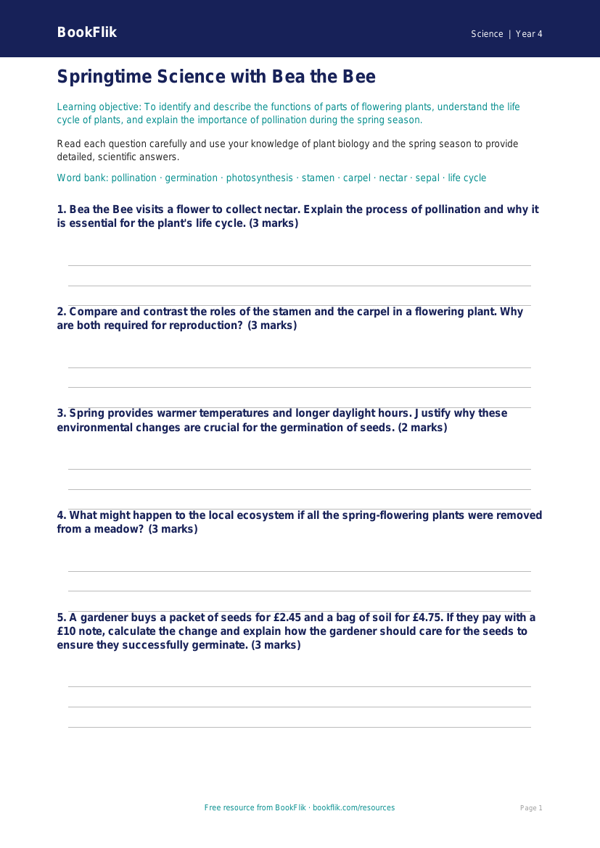
Celebrate the arrival of the new season with our engaging Science spring science worksheet year 4 greater depth resource. Designed specifically for Grade 3 pupils, this activity pack invites students to explore the fascinating biological processes that occur as the world wakes up from winter. Following the Common Core State Standards, this worksheet focuses on seasonal changes, the life cycles of plants, and the environmental factors that trigger growth.
Our original character, Bea the honeybee, guides learners through the complexities of pollination and the importance of spring temperatures in stimulating plant germination. Unlike standard worksheets, this Science spring science worksheet year 4 greater depth pack is crafted to challenge high-achieving pupils. It moves beyond simple observation, requiring children to analyze data, predict outcomes based on environmental shifts, and justify their scientific findings using precise vocabulary.
Teachers can use this resource as a core lesson plan for a spring-themed science unit or as a targeted extension activity for those who demonstrate a deeper understanding of biology. The tasks encourage pupils to compare and contrast the behavior of different organisms during the spring equinox. By integrating higher-order thinking questions, such as explaining why certain plants bloom earlier than others or justifying the necessity of specific pollinators, this Science spring science worksheet year 4 greater depth resource ensures that gifted learners remain intellectually stimulated.
The pack includes six rigorous questions and two creative extension tasks that prompt children to design their own investigations into soil temperature and plant development. Whether used in the classroom or as a challenging home-learning assignment, this content fosters a genuine love for natural history and scientific enquiry. Download this free, high-quality resource today to bring the wonders of the natural world into your classroom and support your most curious young scientists as they develop their critical thinking and analytical skills.
Preview the worksheet
If the preview does not load, open the PDF in a new tab.