
Free Body Parts Worksheet | Year 3 Science | BookFlik
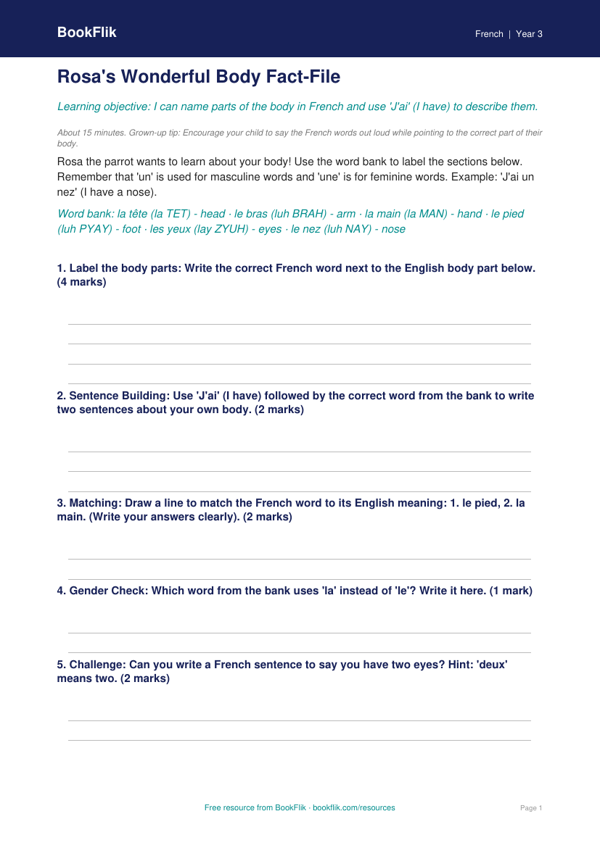
Boost your classroom learning with our exciting new French body parts template year 3 core resource. Designed specifically for Year 3 pupils in UK primary schools, this colourful activity pack helps children confidently identify and label parts of the body in French. Whether you are a teacher planning a lesson on anatomy or a parent supporting home learning, this French body parts template year 3 core offers a structured and engaging way to build essential vocabulary.
The resource introduces key terms such as la tête, le bras, and la jambe, presented alongside clear illustrations of a friendly character. By using this French body parts template year 3 core, children will practise their pronunciation and spelling while developing their knowledge of a new language. The pack includes a variety of exercises, ranging from simple matching tasks to creative labelling activities, ensuring that every learner feels supported.
Our materials align perfectly with the UK National Curriculum for Key Stage 2 languages. We have focused on the core expectations for 7 to 8-year-olds, ensuring the vocabulary is accessible and the tasks build steady progress. Teachers can use these sheets as a starter activity, a main lesson component, or as a quick assessment tool to check understanding. Parents will find the instructions clear and easy to follow, making it a brilliant tool for reinforcing classroom learning at home.
Beyond the core exercises, we have included a fun extension challenge for fast finishers. This encourages children to use their new vocabulary in simple sentences, such as describing the colour of their eyes or the length of their hair. This French body parts template year 3 core is designed to be inclusive, positive, and fun, helping to foster a lifelong love of language learning. Download this free, high-quality resource today to bring a touch of French flair to your Year 3 lessons.
How to use this template
- Time: about 15 minutes
- At home: Encourage your child to say the French words out loud while pointing to the correct part of their body.
- In the classroom: Model the pronunciation of the nasal sounds in ‘main’ and ‘tête’ clearly for the class before they begin.
Preview the worksheet
If the preview does not load, open the PDF in a new tab.