
Free Algorithms Assessment | Year 3 Core | BookFlik
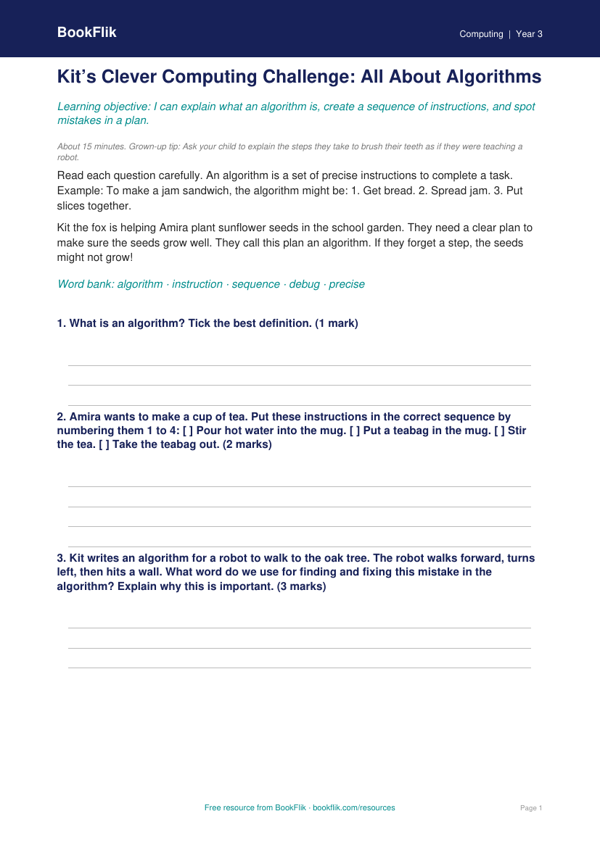
Boost your classroom or home learning with our brand new Computing algorithms assessment year 3 core resource. Designed specifically for the UK National Curriculum, this activity pack helps children aged 7 to 8 master the foundational logic required for programming.
What will children learn?
This assessment focuses on the core principles of algorithms. Children will follow, create, and debug simple sets of instructions to complete tasks. They will learn how to sequence steps logically, just like Kit the fox solving a puzzle. By working through these challenges, pupils will understand that an algorithm is simply a clear, step-by-step plan used to solve a problem or complete a task.
How to use this resource
Teachers can use this Computing algorithms assessment year 3 core as a formal check of understanding after a block of lessons. Parents can also use it at home to support their child’s learning in a fun, pressure-free way. The tasks are presented in a clear, engaging format that feels like a game, ensuring children remain motivated while demonstrating their skills.
Curriculum alignment and differentiation
This pack is perfectly aligned with the Key Stage 2 computing programme of study. It is pitched at the expected standard for Year 3, ensuring children are meeting their age-related expectations. We have included a variety of question types, from sequencing daily routines to identifying errors in a set of instructions. This Computing algorithms assessment year 3 core is designed for learners working at the expected level, providing enough challenge to build confidence while reinforcing key concepts.
For those who finish early, we have included a creative extension task. Children are invited to write their own algorithm for a friend to follow, such as making a jam sandwich or drawing a geometric pattern. Download this free resource today to help your pupils become confident, logical thinkers in the digital world.
How to use this assessment
- Time: about 15 minutes
- At home: Ask your child to explain the steps they take to brush their teeth as if they were teaching a robot.
- In the classroom: Encourage pupils to act out their algorithms physically to see if the sequence works as intended.
Preview the worksheet
If the preview does not load, open the PDF in a new tab.