
Free Algorithms Drawing Sheet | Year 3 Core | BookFlik
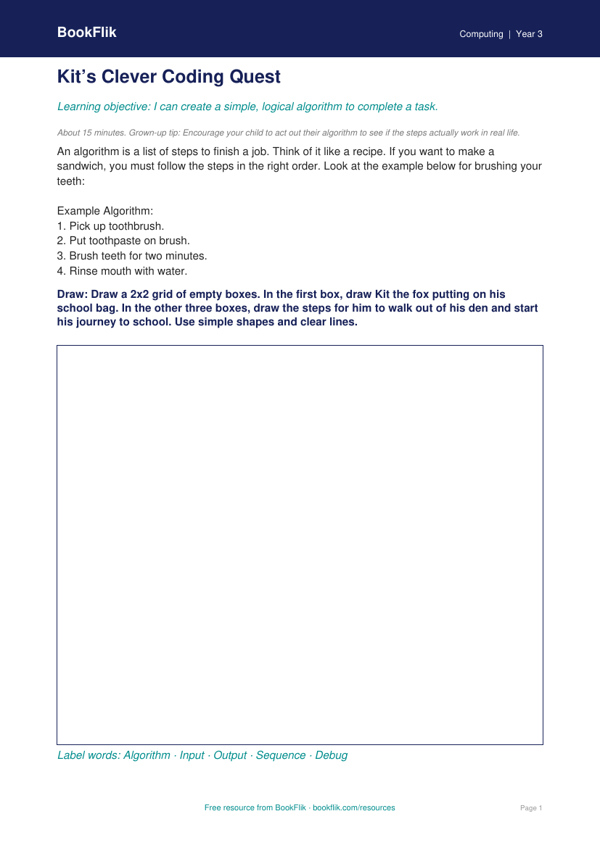
Boost your classroom or home learning with our engaging Computing algorithms drawing sheet year 3 core resource. Designed specifically for the UK National Curriculum, this activity helps children grasp the foundations of programming through creative visual tasks. By breaking down daily routines into simple, logical steps, pupils learn exactly how to design a clear sequence of instructions.
In this lesson, Kit the fox guides learners through the concept of decomposition. Children will use the Computing algorithms drawing sheet year 3 core to map out a sequence for a simple task, such as making a jam sandwich or brushing their teeth. By drawing each stage of the process, students build their understanding of logical order and precision. This is a vital skill for Key Stage 2, helping pupils understand that computers rely on specific, ordered commands to function correctly.
Teachers can use this resource during a Computing lesson to introduce the term algorithm in a fun, accessible way. Parents will also find it perfect for home practice, as it connects abstract coding concepts to familiar activities like getting ready for school or playing in the playground. Because the resource is based on the Computing algorithms drawing sheet year 3 core, it perfectly aligns with the national expectations for Year 3 pupils.
This worksheet is set at the expected standard, ensuring the language and tasks are perfectly suited for seven and eight-year-olds. It encourages children to think like programmers while staying creative with their illustrations. For fast finishers, we have included an extension task that challenges them to identify a bug in a sequence and correct it. Download this free, high-quality resource today to help your class master the building blocks of computing logic with confidence and ease. It is a brilliant way to make digital literacy feel like an exciting adventure.
How to use this drawing sheet
- Time: about 15 minutes
- At home: Encourage your child to act out their algorithm to see if the steps actually work in real life.
- In the classroom: Focus on the importance of sequencing; if a student messes up the order, ask them to ‘debug’ the process.
Preview the worksheet
If the preview does not load, open the PDF in a new tab.