
Free Debugging Worksheet | Year 3 Core | BookFlik
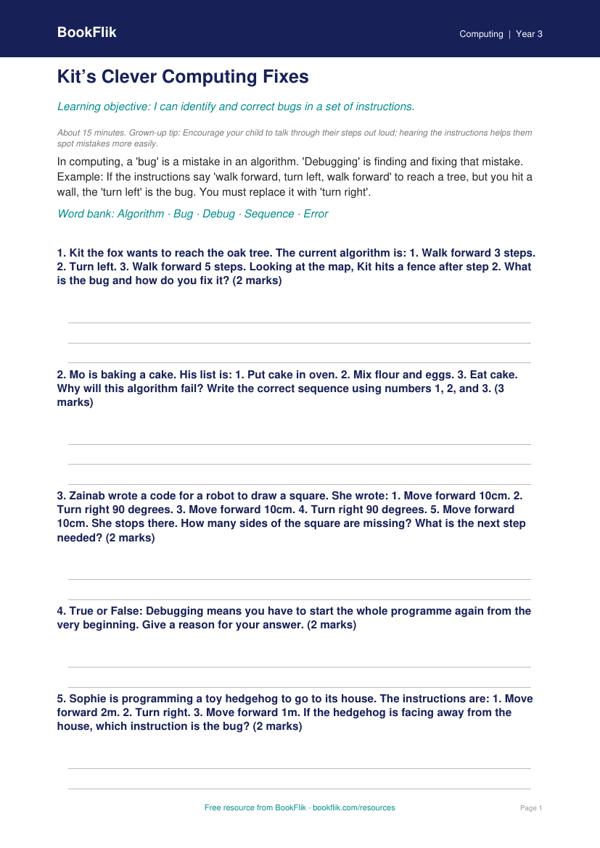
Are you looking for a fun way to teach your pupils about computer programming? Our free Computing debugging worksheet year 3 core is designed specifically for children aged 7-8. This resource helps students develop the logical thinking skills needed to find and fix errors in simple algorithms. By following the adventures of Kit the fox, children will learn how to spot mistakes in a sequence of instructions.
In this lesson, pupils will explore how computers follow step-by-step commands. When a command goes wrong, it is called a bug. Learning to find these bugs is a key part of the national curriculum for Key Stage 2. This Computing debugging worksheet year 3 core provides clear, engaging exercises that encourage children to test their logic and predict outcomes. Teachers and parents can use this sheet during maths or computing lessons to build confidence in problem-solving. It is perfect for classroom activities or extra home practice after school.
The resource is carefully mapped to the UK national curriculum, focusing on the ability to detect and correct errors in programs. We have ensured the content is age-appropriate, using familiar scenarios such as planning a route through a village or helping a friend tidy a classroom. This Computing debugging worksheet year 3 core is differentiated to ensure all learners working at the expected standard can succeed. It includes five to seven questions that test recall and application, helping children move from simple identification to more complex solutions.
We have included an extension task for fast finishers who want an extra challenge with their coding logic. Download this resource today to bring computer science to life for your Year 3 class. It is a fantastic tool for building resilience and technical skills in a warm, encouraging environment. Help your students think like programmers and master the art of debugging with our original and engaging classroom materials.
How to use this worksheet
- Time: about 15 minutes
- At home: Encourage your child to talk through their steps out loud; hearing the instructions helps them spot mistakes more easily.
- In the classroom: Use physical robot toys if available to allow pupils to test their debugging skills in real-time.
Preview the worksheet
If the preview does not load, open the PDF in a new tab.