
Free Programming Flashcards | Year 3 Core | BookFlik
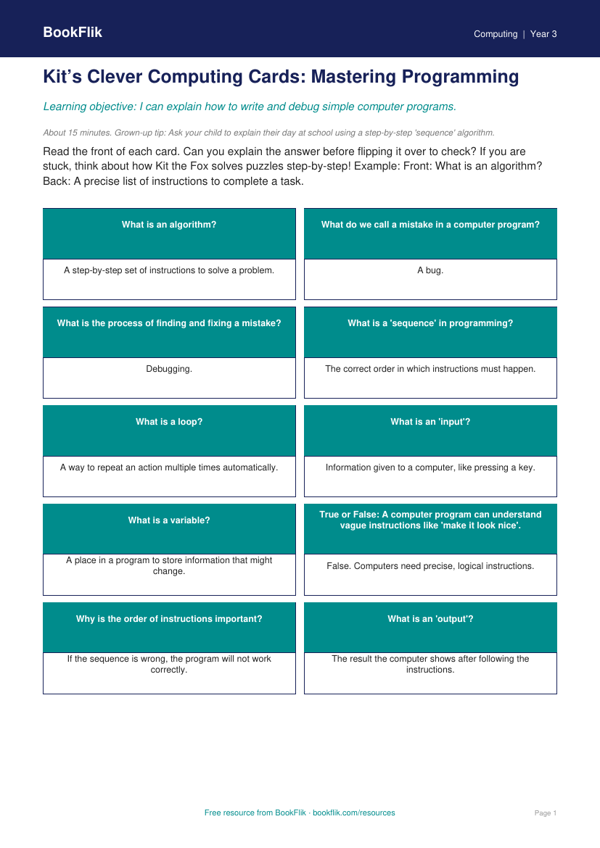
Boost your classroom or home learning sessions with our free printable Computing programming flashcards year 3 core pack. Designed specifically for children aged seven to eight, these resources make learning the foundations of code simple, fun, and highly engaging.
Our Computing programming flashcards year 3 core set focuses on essential concepts including algorithms, debugging, and sequencing. Through these cards, children will learn how to create a clear set of instructions for a computer to follow. They will also discover how to spot and fix errors, which is a vital skill for every young programmer. By using characters like Kit the fox, who loves solving logic puzzles, pupils can explore how computers think in a friendly and supportive way.
These resources are perfect for teachers looking to supplement their Key Stage 2 lesson plans or for parents supporting their child with home learning. You can use them for quick-fire recall games, sequencing challenges, or as a visual aid during practical tasks in the computer suite. They align perfectly with the UK National Curriculum, ensuring that students meet the expected standards for Year 3.
Each pack contains clear, age-appropriate definitions and colourful illustrations to help children grasp abstract concepts quickly. Because we know every child learns at a different pace, these Computing programming flashcards year 3 core materials are designed to be flexible. They provide a solid foundation for those working at the expected level, while offering clear vocabulary for those just starting their programming journey.
Download your set today to bring the world of algorithms to life. Whether you are in a busy classroom in Manchester or working from home in a quiet village, these cards provide a hands-on way to master technical language. Unlock the joy of computing and help your Year 3 learners become confident, creative problem solvers today.
How to use this flashcards
- Time: about 15 minutes
- At home: Ask your child to explain their day at school using a step-by-step ‘sequence’ algorithm.
- In the classroom: Use these cards to spark a discussion about why computers are literal and need clear, ordered instructions.
Preview the worksheet
If the preview does not load, open the PDF in a new tab.