
Free Programming Template | Year 3 Core | BookFlik
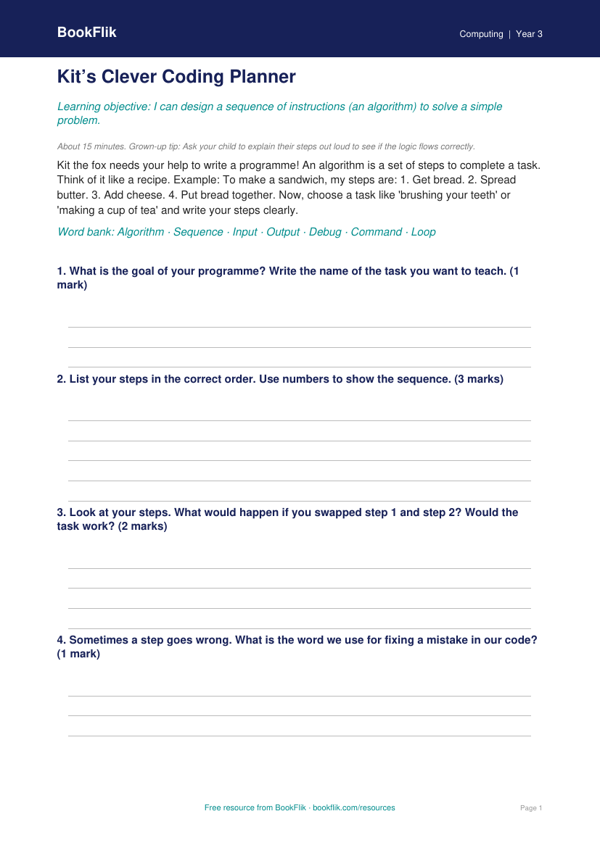
Boost your Key Stage 2 classroom with our free Computing programming template year 3 core resource. Designed specifically for Year 3 pupils, this pack helps children understand the fundamental logic behind algorithms and sequence-based coding. As pupils progress through the primary curriculum, mastering the ability to design, write, and debug simple programs becomes essential.
Our Computing programming template year 3 core is built around our friendly character, Kit the fox. Kit loves solving puzzles and uses clever, logical steps to navigate through digital mazes. By following Kit’s adventures, children learn how to create a series of instructions to achieve a specific goal. This resource aligns perfectly with the UK National Curriculum, focusing on the requirement that pupils should be taught to use sequence, selection, and repetition in programs.
Teachers and parents can use this flexible template to support lessons in the classroom or as a fun home-learning activity. The material is carefully differentiated for learners working at the expected standard, ensuring that every child can build their confidence with computational thinking. The activities feature clear, British English instructions and relatable scenarios, such as helping a hedgehog find its way across a village green or ordering steps for a school bake sale.
By using this Computing programming template year 3 core, you provide a structured way for children to practise debugging. If a sequence does not work, they can use their logic to spot the error and fix it, just like a real programmer. The pack includes five recall and application questions, plus a creative extension task for fast finishers who want to design their own complex algorithm. Download this template today to bring logic, patterns, and problem-solving to life in your lessons. It is the perfect way to support your pupils as they develop their early coding skills in a warm and engaging way.
How to use this template
- Time: about 15 minutes
- At home: Ask your child to explain their steps out loud to see if the logic flows correctly.
- In the classroom: Encourage pupils to act out their algorithms to check for missing steps.
Preview the worksheet
If the preview does not load, open the PDF in a new tab.