
Free Musical Elements Drawing Sheet | Year 5 Greater Depth | BookFlik
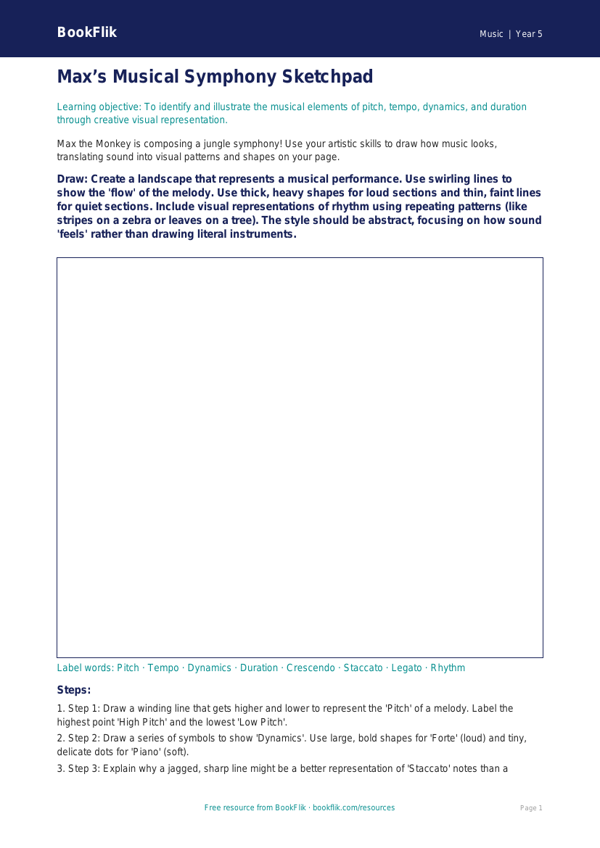
Unlock the creative potential of your classroom with our premium Music musical elements drawing sheet year 5 greater depth resource. Designed specifically for pupils who thrive on complex challenges, this engaging activity encourages children to visualise the abstract concepts of music theory. By transforming auditory experiences into visual art, students will explore the core pillars of composition, including tempo, dynamics, pitch, and timbre.
This Music musical elements drawing sheet year 5 greater depth resource is perfectly aligned with the UK National Curriculum for Key Stage 2. It requires students to listen to diverse musical excerpts and interpret how composers manipulate elements to evoke specific moods or narratives. Rather than simple identification, this task asks gifted learners to justify their artistic choices through annotations, bridging the gap between musical analysis and visual expression.
Teachers can integrate this resource into their curriculum as a starter activity to sharpen active listening skills or as a summative assessment tool following a unit on composition. The sheet is meticulously differentiated to support greater depth, moving beyond basic terminology. It prompts students to engage with higher-order thinking, asking them to explain why a composer might choose a staccato rhythm to represent tension or how a sudden crescendo alters the listener’s emotional response.
Whether you are seeking to enrich your existing lesson plans or provide extension opportunities for high-attaining pupils, this Music musical elements drawing sheet year 5 greater depth pack offers the perfect balance of creativity and academic rigour. Pupils will develop a deeper appreciation for the structural complexity of music whilst enhancing their ability to articulate sophisticated musical ideas. Download this free, high-quality resource today to inspire your young musicians to think, listen, and create with newfound clarity. It is an essential addition to any primary music teacher’s toolkit, fostering a deeper understanding of how the building blocks of sound work together in harmony.
Preview the worksheet
If the preview does not load, open the PDF in a new tab.