
Free E-Safety Activity Sheet | Year 3 Core | BookFlik
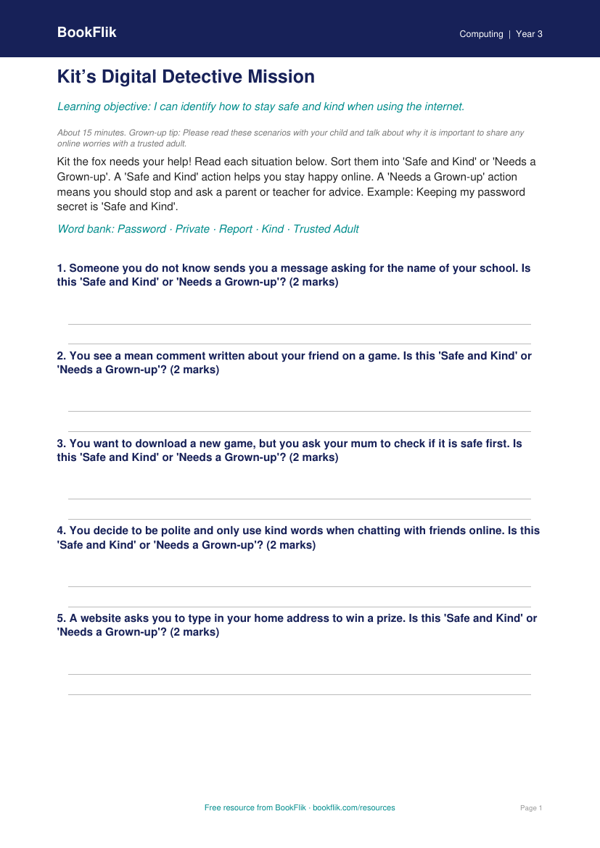
Help your class stay safe and smart online with our new Computing e safety activity sheet year 3 core resource. Designed specifically for Key Stage 2 learners, this colourful worksheet helps children understand how to navigate the digital world with confidence and kindness.
In this lesson, our original character Kit the fox helps students explore the importance of keeping personal information private. Children will learn how to identify secure passwords, recognise suspicious messages, and understand why they should always talk to a trusted adult if something online makes them feel worried or confused. By using relatable scenarios set in familiar places like a village school or a local park, the content feels relevant and easy to understand.
This Computing e safety activity sheet year 3 core is fully aligned with the UK National Curriculum for computing. It focuses on the key objective of using technology safely, respectfully, and responsibly. Teachers can use this as a starter activity for a computing lesson, while parents can use it at home to open up important conversations about screen time and digital friendships.
The resource includes five engaging tasks, ranging from simple recall questions about privacy to practical problem-solving exercises. We have ensured that the language is accessible for seven-to-eight-year-olds, keeping sentences clear and encouraging. As a core-level resource, it provides the perfect balance of challenge and support for pupils working at the expected standard.
By downloading this Computing e safety activity sheet year 3 core, you gain access to a professionally designed tool that promotes digital wellbeing. It is a fantastic way to build a foundation of online safety that will serve your students well as they grow. For fast finishers, we have included a bonus challenge at the bottom of the page to encourage creative thinking about how they can be a good digital citizen today.
How to use this activity sheet
- Time: about 15 minutes
- At home: Please read these scenarios with your child and talk about why it is important to share any online worries with a trusted adult.
- In the classroom: Encourage children to discuss who their ‘Trusted Adults’ are both at home and at school.
Preview the worksheet
If the preview does not load, open the PDF in a new tab.